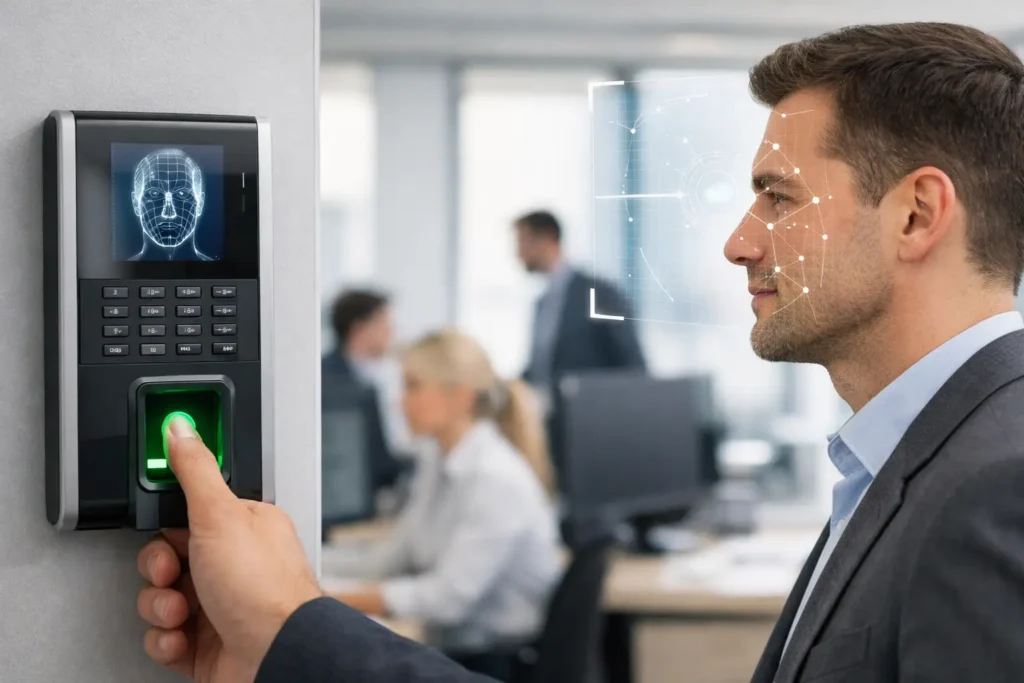
A wellbeing initiative can be easy to announce but difficult to make accessible. Employees may not have time to book appointments, travel to a clinic or fit another commitment around work and caring responsibilities. Workplace biometric checks explained in practical terms are a way to give people a quick, private view of key health measurements during the working day, without creating an administrative project for HR.
For employers, the value lies in convenience and participation. A self-service health screening kiosk can be placed on site for employees to use in minutes, producing immediate results they can take away and consider in their own time. It supports the simple but valuable principle of helping people know their numbers.
What are workplace biometric checks?
Workplace biometric checks are basic health measurements taken to give an individual an indication of their current physical health profile. In a workplace setting, they are commonly offered through a self-service screening kiosk or as part of a wider wellbeing event.
The word biometric can sound more complicated than it is. It refers to measurable physical characteristics, rather than a diagnosis. A typical workplace health screening kiosk records height, weight, body mass index (BMI), blood pressure, pulse and body fat percentage. The employee follows simple on-screen instructions, completes the assessment privately and receives their results straight away.
These checks are not a replacement for a GP, occupational health assessment or clinical diagnostic test. They are an accessible starting point. If an employee receives a result that concerns them, they should speak to an appropriate healthcare professional, particularly where a result is unusual, persistently high or accompanied by symptoms.
The key measurements employees receive
A clear explanation of each measure helps employees use the kiosk with confidence and understand what the figures mean.
Height, weight and BMI
Height and weight provide the basis for calculating BMI. BMI is a screening tool that compares weight with height and can indicate whether an adult falls within a broad weight category. It is useful at population level and can prompt a helpful conversation or personal goal, but it does not measure fitness, body composition or overall health on its own.
For example, someone with a high level of muscle mass may have a BMI that does not reflect their health status. The right approach is to view BMI alongside other measurements and individual circumstances, not as a judgement.
Blood pressure
Blood pressure measures the force of blood against artery walls. The result is shown as two numbers: systolic pressure, when the heart pumps, and diastolic pressure, when the heart rests between beats.
High blood pressure often has no obvious symptoms, which is why convenient checks can be useful. However, a single reading can be affected by stress, recent activity, caffeine, talking during the test or how the cuff is positioned. Employees should sit quietly and follow the kiosk instructions. A raised result should be rechecked and discussed with a healthcare professional rather than treated as a diagnosis.
Pulse
Pulse, or heart rate, is the number of heartbeats per minute. It can vary naturally according to movement, stress, medication, fitness, illness and the time of day. Recording pulse alongside blood pressure gives employees another useful reference point, particularly when they use screening as part of an ongoing wellbeing plan.
Body fat percentage
Body fat percentage estimates how much of the body is made up of fat. It can provide a different perspective from BMI because it considers body composition. Like BMI, it is best used as an indicator rather than a definitive statement about health. Hydration levels and the method used can affect readings, so trends over time are generally more meaningful than one isolated result.
How a workplace screening kiosk works on site
A health screening kiosk is designed to reduce the friction that can limit participation in wellbeing programmes. Rather than asking employees to select a time slot or meet with a clinician, the kiosk can be available during agreed workplace hours for people to use when convenient.
The employee steps into the kiosk, follows the prompts and takes the measurements. The process takes only a few minutes. At the end, the kiosk prints a personal results slip immediately, allowing the individual to retain their information privately.
For an employer, this model can work especially well for larger teams, shift patterns and multi-site organisations where appointment-based screening would be difficult to coordinate. It also gives employees control over whether and when they take part. Participation should always be voluntary, with clear communication that the purpose is wellbeing support rather than performance management or employment decision-making.
Workplace biometric checks explained: privacy and trust
The success of any screening activity depends on trust. Employees need to know what is being measured, who can see the results and what will happen to any data collected.
Individual health results should remain private to the employee. Employers should not expect to see personal readings, and no one should feel pressured to disclose them to a manager or colleague. Positioning the kiosk in a suitable area with enough privacy is an important practical consideration, as is communicating in advance how the service will operate.
Some organisations choose anonymised usage data to understand overall engagement, such as the number of completed checks. This can help HR evaluate uptake without identifying individuals or accessing their health information. If data is collected, employers should be transparent about the purpose, the information involved, retention arrangements and the safeguards in place. UK data protection requirements should form part of the planning process.
Avoid presenting screening as a test employees need to pass. The strongest message is simple: this is a convenient opportunity to understand basic health measurements and decide whether to take a next step for personal wellbeing.
Planning a high-participation screening day
A kiosk is straightforward to deploy, but a few decisions make the experience smoother. First, choose a location that is visible enough to encourage use while still offering discretion. A meeting room, wellbeing area or screened section of a communal space may be suitable, depending on the workplace.
The site also needs sufficient space and access to power. Confirming these requirements before delivery prevents last-minute changes and means the kiosk can be installed ready for employees to use. For organisations with several locations, a planned schedule can move the service between sites and give each team a fair opportunity to take part.
Communication matters as much as the equipment. Let employees know what measurements are included, how long the check takes and that they will receive instant printed results. Explain that the screening is voluntary and private. A short reminder on the day can increase uptake, especially for busy employees who may otherwise intend to participate but run out of time.
It is also worth considering the timing. A health awareness week can create momentum, but screening need not be limited to one annual campaign. It can support new year wellbeing activity, mental health and stress awareness programmes, return-to-office initiatives or a wider benefits calendar.
Turning results into practical wellbeing support
A single health check can prompt reflection, but ongoing support gives employees more ways to act on what they learn. Someone who wants to improve movement levels may respond well to office yoga or a workplace fitness session. Someone noticing the effect of stress on their blood pressure may benefit from a resilience, sleep or mental health awareness webinar. Nutrition education can help employees interpret everyday habits without promoting restrictive or one-size-fits-all advice.
This is where a broader programme is often more effective than a stand-alone event. Screening provides a measurable moment of engagement, while regular wellbeing services provide options for different needs, interests and confidence levels. Employers can also use anonymous participation figures to assess whether communications, locations or timings should change next time.
Relaxa supports this approach with health screening kiosks that can be delivered, installed and maintained across the UK, alongside on-site and online wellbeing services that help keep the conversation going after screening day.
What employers should avoid
Biometric screening is most useful when it is supportive, practical and proportionate. Avoid making participation compulsory or using individual results for absence, capability, insurance or recruitment decisions. Health data is sensitive, and employees must be able to make informed choices without concern that a result could affect their employment.
Employers should also avoid overstating what the kiosk can tell someone. It provides useful indicators, not a clinical verdict. Clear signposting to appropriate medical support is essential where an employee is worried by a result or has existing health concerns.
Finally, do not let screening become a one-off gesture with no follow-up. Even a simple message after the event, reminding employees where they can find wellbeing resources and encouraging them to seek medical advice where needed, makes the initiative more useful.
A well-planned screening day gives employees time, privacy and a practical prompt to focus on their health. When the checks are easy to access and followed by relevant support, the workplace becomes a more credible place to build everyday wellbeing habits.