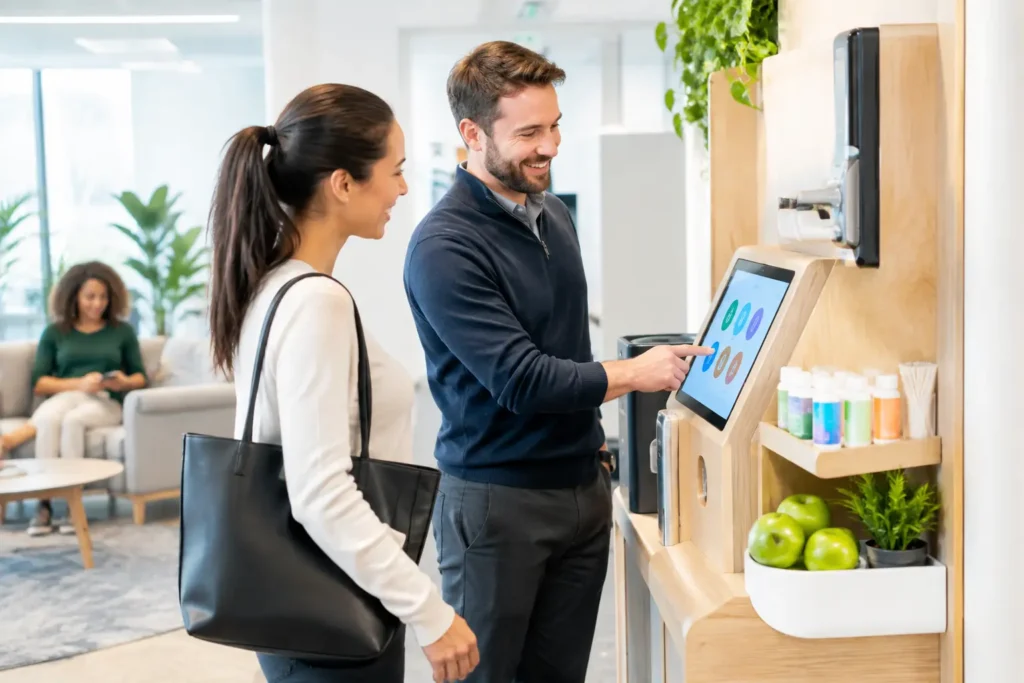
A wellbeing kiosk can turn a wellbeing awareness day from a well-intended campaign into an activity employees can use in minutes. Rather than asking people to book appointments, travel off-site or share personal information with a colleague, it gives them an accessible way to check key health measures during the working day and leave with immediate printed results.
For HR and wellbeing teams, the value is practical. A kiosk creates a visible, low-admin health initiative that can accommodate high numbers of employees, including those who may not normally engage with scheduled wellbeing support. It is particularly useful for organisations looking to encourage preventative health habits through a simple message: know your numbers.
What a wellbeing kiosk measures
A workplace health screening kiosk captures a set of core biometric measurements: height, weight, body mass index (BMI), blood pressure, pulse and body fat percentage. Employees complete the assessment independently, with results printed immediately for them to take away.
Each measure offers a useful starting point for personal reflection. Height and weight are used to calculate BMI, a broad indicator that can help people understand whether their weight sits within a healthy range for their height. Body fat percentage adds further context, as two people with the same BMI can have different body composition.
Blood pressure and pulse provide a snapshot of cardiovascular health at the point of screening. A single reading is not a diagnosis and can be influenced by factors such as caffeine, stress, recent activity or how rested someone feels. However, an unexpected result can prompt an employee to monitor their health, speak to a pharmacist or arrange an appointment with their GP where appropriate.
This distinction matters. The role of a wellbeing kiosk is to support awareness and early action, not to replace clinical assessment or occupational health advice. Presenting the service clearly helps employers set realistic expectations while still giving employees useful, tangible information.
Why kiosk screening improves participation
Many workplace wellbeing programmes struggle not because employees do not care about their health, but because participation asks too much of them. A booked screening session may clash with meetings, shifts, caring responsibilities or a busy commute. Employees may also put off a health check if arranging it feels complicated.
A kiosk removes much of that friction. It can be placed in a suitable workplace area for a defined period, allowing people to participate when it works around their day. Assessments take only minutes, so it is possible to support substantial uptake without a diary full of individual appointments.
This format can work well across office-based, hybrid and multi-site organisations. A head office may use a kiosk as part of a wellbeing week, while employers with dispersed teams can plan visits across different locations. For shift-based workforces, availability across the day can be more inclusive than a short series of booked consultations.
Placement still needs care. Employees should have enough privacy to use the equipment comfortably, without feeling watched by passing colleagues. A quiet meeting room, wellbeing area or screened-off section of a communal space is often more appropriate than a busy reception area.
Making a wellbeing kiosk easy to run on-site
The strongest workplace initiatives are straightforward for employees and manageable for the team organising them. Before booking a kiosk, identify the proposed location and confirm it has adequate floor space and access to a standard power supply. The area should be level, accessible and suitable for employees to stand and complete their measurements safely.
A service-led rental model reduces the operational burden on HR. With Relaxa, field service technicians and engineers manage delivery, installation, maintenance and basic user training across the UK. This means a wellbeing lead does not need to become responsible for setting up specialist equipment or resolving technical issues during an event.
A practical on-site plan should cover four areas:
- a suitable private or semi-private location with sufficient space;
- power access and clear routes for delivery and installation;
- internal communications that explain what the kiosk measures and when it is available;
- a named workplace contact who can direct employees and coordinate access on the day.
The communications are as important as the equipment. Tell employees that participation is voluntary, what results they will receive and where they can seek advice if a reading concerns them. A clear message reduces uncertainty and encourages people who might otherwise assume the service is only for fitness enthusiasts or those already focused on health.
Immediate results, with employee control
Instant printed results give the screening a clear outcome. Employees do not have to wait for an email or chase an administrator to see their information. They can consider their readings privately and decide what action, if any, they want to take next.
For employers, this approach also helps maintain sensible boundaries. Individual results belong to the employee and should not be treated as a performance measure, a test of commitment or a source of management reporting. Participation should always be voluntary, with no pressure to disclose personal readings.
Where organisations want to evaluate engagement, anonymised usage data may provide a useful option. It can show whether the initiative reached the intended audience and inform future activity without identifying individuals. The exact approach should be agreed in advance, alongside clear information about how any data is handled and retained.
That balance is essential. Employees are more likely to participate when they trust that a wellbeing initiative is genuinely for their benefit rather than an exercise in monitoring.
Turning a one-off screening into year-round support
A wellbeing kiosk can be highly effective as a stand-alone event, but it often achieves more when it is part of a wider programme. Screening can create a natural point of interest, particularly when employees receive a result they want to understand better. The next step is to offer practical support that relates to common wellbeing goals without making assumptions about anyone’s health.
For example, a screening event can sit alongside a session on nutrition, sleep or posture, an office yoga or movement class, or resources covering stress and resilience. On-site massage can provide a separate but complementary opportunity for people to pause and focus on their wellbeing. Online webinars and training also give hybrid and remote colleagues access to support after the kiosk has left site.
The right combination depends on the workforce. A sedentary office team may respond well to movement and posture support. A high-pressure professional environment may prioritise stress management, mental health awareness and sleep. Organisations with multiple locations may need a mix of travelling on-site services and digital learning to provide consistent access.
Avoid treating screening figures as the only measure of success. High participation, positive employee feedback, repeat engagement with wellbeing activities and better awareness of available support can all be meaningful outcomes. A modest uptake in a first event may still be valuable if it helps establish trust and gives wellbeing champions evidence for improving the next campaign.
Questions to ask before you book
Before selecting a wellbeing kiosk provider, ask how the equipment will be delivered, installed and supported. Confirm what measurements are included, whether employees receive printed results, how long a typical assessment takes and what is required from your site. It is also sensible to ask about consumables, maintenance arrangements and technical support if the kiosk is hired for more than one day.
Consider the audience as well as the venue. If your goal is broad participation, schedule the service at times that suit different working patterns and promote it more than once. Managers can help by allowing employees reasonable time to attend, while keeping participation clearly optional.
A simple health check is most useful when it feels easy, private and relevant. Give employees space to take part on their own terms, and provide credible follow-on support for those who want to make a change. That is how a workplace screening event becomes a practical expression of duty of care rather than a box-ticking exercise.