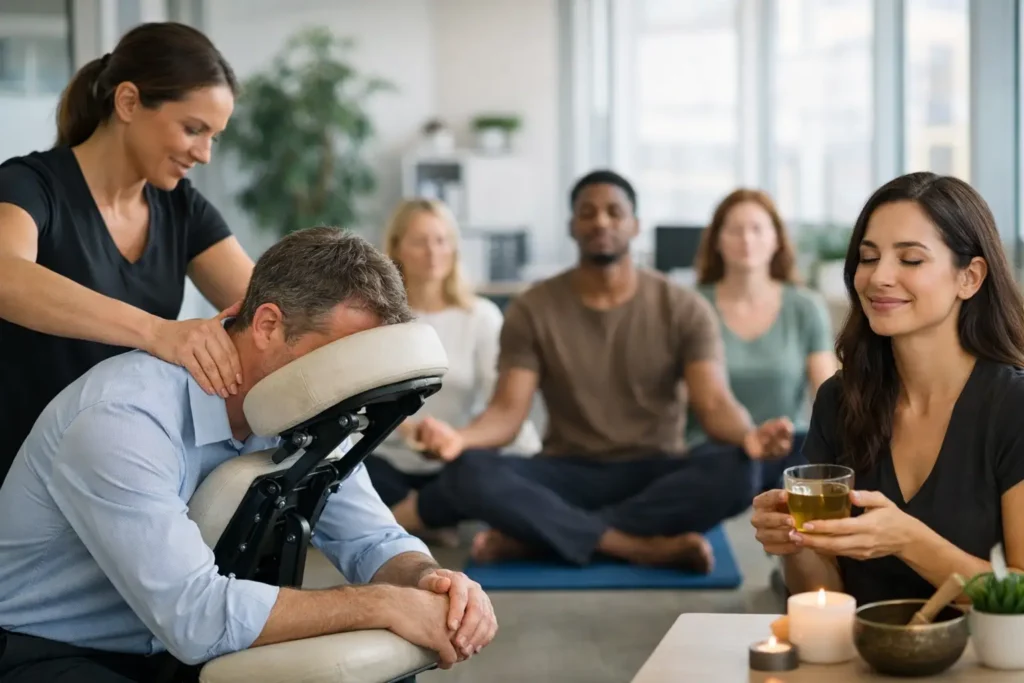
A wellbeing day can look busy without delivering much. Employees may enjoy a one-off activity, but HR teams need initiatives that are easy to run, relevant to the workforce and capable of supporting longer-term health choices. The best on-site wellbeing sessions combine a clear employee benefit with practical delivery: minimal disruption, straightforward booking and useful evidence of engagement.
For most employers, the right programme is not one activity repeated every month. It is a considered mix of preventative health checks, physical activity, recovery support and learning that reflects the needs of the organisation. A warehouse team, a head office and a hybrid workforce will not necessarily respond to the same format.
What makes an on-site wellbeing session effective?
A strong workplace wellbeing session removes the usual barriers to participation. Employees should be able to take part during the working day, without travelling across town, completing lengthy forms or waiting weeks for an appointment. Short, accessible sessions usually achieve better uptake, especially where shift patterns, customer commitments or site locations make diary management difficult.
It also needs a defined purpose. A massage session can offer immediate relief from muscular tension. A yoga class can encourage movement and improve awareness of posture. A health screening initiative helps people understand key biometric measures. These are all worthwhile outcomes, but they should not be presented as interchangeable.
Before booking, decide what the initiative needs to achieve. The priority may be improving participation in an existing wellbeing programme, supporting stress awareness, encouraging employees to know their health numbers or providing a visible duty-of-care activity during a demanding period. Once that is clear, it becomes much easier to choose the format, timing and communications.
The best on-site wellbeing sessions for different workplace needs
Health screening for preventative awareness
Health screening is particularly effective when employers want to make preventative health practical. Rather than asking employees to arrange a check in their own time, an on-site Health Screening Kiosk can provide a simple self-service assessment during the working day.
A kiosk can capture height, weight, BMI, blood pressure, pulse and body fat percentage, then print results immediately. The assessment takes minutes and does not require individual appointment scheduling, making it suitable for larger workplaces, multi-shift environments and wellbeing events where participation needs to be high.
Each measure provides a useful starting point. Blood pressure and pulse can prompt employees to consider cardiovascular health, while BMI and body fat percentage offer context around body composition. Results are not a diagnosis, and communications should make that clear. Their value is in giving employees a private, convenient prompt to reflect on their health and seek professional advice where appropriate.
For HR teams, the operational advantages are just as important. A kiosk requires a suitable space and power supply, while delivery, installation, basic training and maintenance can be managed by service technicians. Where required, anonymised usage data can help employers understand participation without compromising personal health information.
On-site massage for immediate recovery support
On-site massage remains one of the most popular options for a reason: the benefit is immediate and easily understood. Short seated massage sessions can help employees step away from their desks, ease upper-body tension and return to work feeling more settled.
This format works well in office settings, during employee appreciation weeks and at times of sustained workload. It is also a useful engagement tool when a broader wellbeing programme needs a highly visible activity that encourages people to take notice.
The trade-off is capacity. Individual appointments mean that a massage therapist can only see a set number of employees in a day. It is worth using a simple booking system, allowing enough time between slots and considering how access will work for employees who are not desk-based. Massage is best treated as one component of a wider offer rather than the sole answer to workplace wellbeing.
Office yoga and movement classes
Long periods of sitting, repetitive tasks and limited movement can all affect comfort, energy and concentration. Office yoga and movement sessions give employees a practical way to reset without needing changing rooms, specialist fitness levels or a full gym programme.
The most effective classes are inclusive. They should offer options for different abilities, use a meeting room or clear floor space, and focus on movements that employees can realistically repeat in their own working day. Sessions centred on mobility, posture, breathing and desk-friendly stretches can be more appropriate than demanding exercise classes for a mixed workplace group.
Timing matters. A short morning session may work well for teams that start together, while lunchtime or late-afternoon classes can suit office-based staff. For shift workers, a series of smaller sessions is often more realistic than one central class. Ask employees what would make participation possible before committing to a schedule.
Stress, resilience and mental health awareness workshops
Wellbeing cannot rely only on physical activities. Employees also need clear, credible support to recognise stress, understand mental health and build habits that protect their capacity at work.
A structured workshop can cover topics such as stress management, resilience, mental health awareness and sleep. These sessions are most useful when they are practical rather than overly theoretical. Employees should leave with techniques they can use, such as identifying early signs of pressure, setting healthier boundaries, preparing for difficult conversations or improving routines that support rest.
For managers, this type of session can be particularly valuable. Managers influence workload, team culture and how confidently people speak up when they are struggling. A general employee session may raise awareness, but manager-focused learning can help turn that awareness into more supportive day-to-day practices.
There is an important boundary here. A workplace workshop is not counselling, clinical assessment or a replacement for professional mental health support. Communications should set realistic expectations and signpost internal support routes where they exist.
Nutrition, sleep and posture sessions
Short educational sessions on nutrition, sleep and posture can work well where employees want practical advice that fits normal working lives. They are especially useful as follow-up activity after health screening, when employees may be more interested in small, manageable changes.
A nutrition session can focus on sustaining energy through the working day rather than promoting restrictive diets. Sleep training can address routines, screen habits and recovery. Posture sessions can help employees adjust their workstation and build movement breaks into their day. These topics are approachable, but they still need to be delivered in a way that avoids judgement and respects different health circumstances.
Build a programme, not a one-day event
A single wellbeing day can generate attention, but continued engagement usually comes from repetition and variety. A sensible annual plan might begin with health screening to create awareness, follow with movement or massage sessions to encourage participation, and use webinars or online courses to keep support available between on-site events.
This approach also gives employees more than one way to take part. Someone may be uncomfortable joining a group yoga class but happy to use a private screening kiosk. Another person may prefer a webinar on sleep or stress because they work remotely. Choice improves accessibility and helps a wellbeing programme feel relevant rather than compulsory.
Relaxa’s combination of on-site screening, workplace sessions and digital learning allows employers to plan activity across the year without creating separate supplier arrangements for every need.
Practical planning that protects participation
The best wellbeing activity can underperform if the logistics are unclear. Start by choosing a visible but suitably private location. Screening needs enough room for the equipment and access to power, while massage and learning sessions need a quiet area where employees can participate without interruption. Movement classes need safe floor space and clear expectations about clothing and accessibility.
Communicate early and plainly. Explain what the session involves, how long it takes, whether booking is required and who it is for. For health screening, be clear about the measurements provided, that results are printed for the employee, and that the service is not a medical diagnosis. Privacy reassurance is essential if you want employees to participate with confidence.
Consider coverage as carefully as promotion. If the workplace operates across several sites or shifts, a central event may unintentionally exclude many employees. Rotating visits, extending kiosk rental periods or providing online training alongside on-site activity can make the programme more equitable.
Finally, decide how success will be measured before the event begins. Participation numbers, anonymous usage data, session feedback and repeat attendance all provide useful evidence. The aim is not to monitor individuals. It is to understand whether the service was convenient, trusted and worth repeating.
The right wellbeing session gives employees something they can use immediately, while giving employers a realistic route to sustained engagement. Start with the barrier you most need to remove – time, access, awareness or confidence – and select the service that makes taking part easiest.