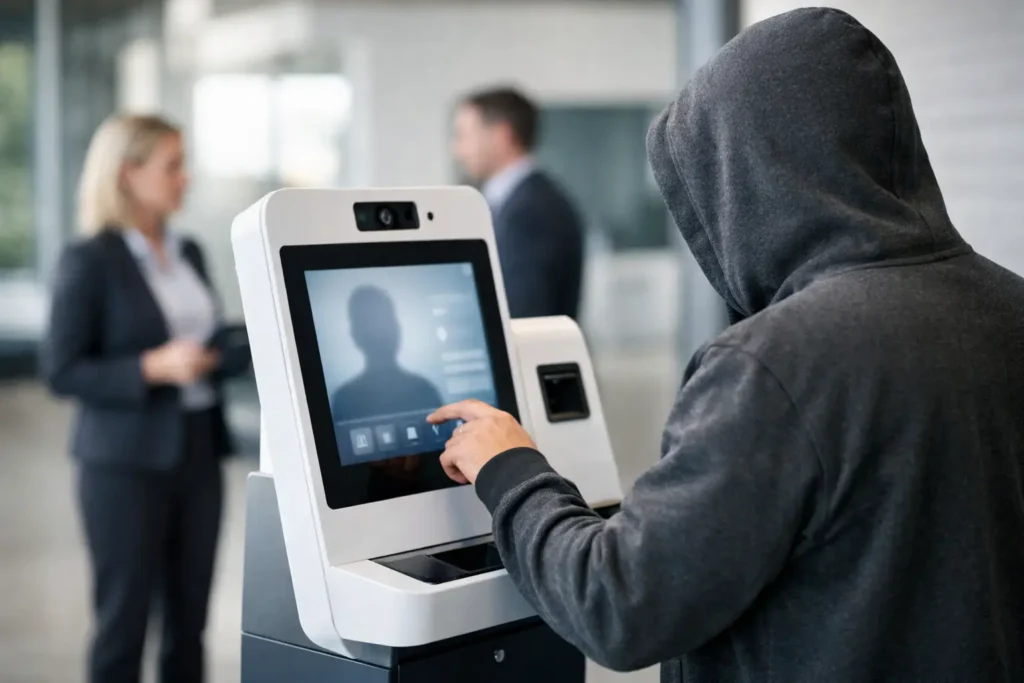
A health screening kiosk can attract strong participation because it removes a common barrier: employees do not need to book an appointment, explain why they are attending or discuss their results with a colleague. But can employees use screening kiosks anonymously? In many workplace deployments, yes – provided the kiosk is configured for anonymous use and the employer is clear about what information is, and is not, collected.
For HR and wellbeing teams, the distinction matters. A screening event should help people understand their own health measures, not create concern that personal results will be visible to a manager, shared with colleagues or used in employment decisions. Setting this expectation clearly is one of the most practical ways to build trust and encourage uptake.
Can employees use screening kiosks anonymously?
Employees can use a screening kiosk anonymously when it does not require them to enter identifiable details such as their name, work email, employee number or date of birth. They complete the check independently, receive their measurements and take away their printed results.
A typical workplace kiosk assessment takes only a few minutes and can provide height, weight, BMI, blood pressure, pulse and body fat percentage. These figures are intended to give the individual a useful starting point for preventative health action. The printout belongs to the employee, who can decide whether to keep it private, discuss it with a healthcare professional or use it to set personal wellbeing goals.
Anonymous use does not mean the workplace cannot understand whether the initiative has been used. Employers may choose to receive anonymised usage information, such as the number of completed checks over a screening day. This can help demonstrate engagement without connecting an individual to a set of health results.
Anonymous is not the same as confidential
These terms are often used interchangeably, but they describe different arrangements.
An anonymous screening process does not collect information that identifies the person using the kiosk. Confidential screening may collect personal details, but controls who can access them and how they are handled. Both approaches can have a place in a workplace wellbeing programme, but they require different communications and data arrangements.
For a simple, high-participation health awareness event, anonymous access is often the most straightforward option. It avoids the need for employees to register, reduces queues and gives people more control over their information. It can be particularly suitable where the purpose is to encourage employees to know their numbers rather than to create an individual occupational health record.
Where an organisation needs individual follow-up, referral pathways or health monitoring over time, identifiable data may be necessary. That changes the nature of the service. Employers should explain the purpose, lawful basis, access arrangements and retention period before asking staff to provide personal health information. Health data needs particularly careful handling under UK data protection law.
Why privacy drives participation
Even in supportive organisations, employees may hesitate to take part if a kiosk is positioned as an employer-led assessment of their health. Concerns can be greater around weight, body fat percentage and blood pressure, particularly if people think they may be judged for their results.
A private, voluntary kiosk helps shift the message. The employer is making an accessible wellbeing resource available; the employee chooses whether to use it and what to do with the outcome. That is a more credible expression of duty of care than asking staff to disclose sensitive measurements.
Privacy also makes the service more practical for mixed workforces. Office-based employees may be comfortable joining a planned wellbeing day, while shift workers, field teams and colleagues who are less engaged with formal health services may prefer a quick, discreet check during the working day. No appointment requirement means more people can use the kiosk when it suits their break pattern.
How to set up an anonymous screening day properly
The physical set-up is as important as the data approach. A kiosk should be placed where employees can use it without feeling watched or rushed. A quiet meeting room, wellbeing space or screened-off area is usually more suitable than a busy reception area, main corridor or open-plan workspace.
Give people enough room to step on and off the equipment comfortably and read their printout in private. Avoid placing the printed result tray where another person could easily see it. If the event is busy, simple signage can direct colleagues to queue away from the user rather than immediately beside them.
The employer should also communicate the arrangement before the event. A short internal message should state that participation is voluntary, no appointment is needed, which measures the kiosk provides and whether personal information will be collected. If anonymised attendance figures are being reported, say so plainly. Employees should never have to guess what happens to their data.
Keep managers out of the results process
Managers can promote a screening day and make time for employees to attend, but they should not collect printouts, ask people to report their figures or keep an informal record of who has used the kiosk. This can undermine confidence quickly, even where intentions are positive.
The right message is practical: use the kiosk if you wish, take your own results away and seek appropriate advice if a reading concerns you. A wellbeing champion can help people find the location or understand the process, but should not interpret individual measurements unless they are qualified and formally appointed to do so.
Be clear about the limits of the check
A kiosk offers useful indicators, not a diagnosis. Blood pressure can vary due to stress, recent activity, caffeine, medication and other factors. BMI and body fat percentage are also screening measures that need context. An unexpected or concerning result should prompt the employee to speak to a GP, pharmacist or relevant healthcare professional, rather than rely on one workplace reading.
This is not a reason to avoid screening. It is a reason to present it accurately. Employees benefit most when they understand that their results are a prompt for informed action, not a pass-or-fail assessment.
What employers can measure without personal health data
Anonymous programmes can still give wellbeing teams useful evidence for future planning. The safest focus is on operational and aggregate measures: how many people used the kiosk, participation by site or event date where this cannot identify individuals, and demand for related support such as nutrition education, stress management or movement sessions.
These insights can help an organisation decide whether to repeat screening, extend it to other locations or build a broader calendar of wellbeing activity. For example, strong kiosk participation may indicate that employees value convenient, self-directed health support. A follow-up webinar on sleep, a workplace movement class or mental health awareness training can then keep the momentum going.
However, aggregate reporting must remain genuinely anonymous. In a very small team, even a limited breakdown may make it possible to work out who took part. In those cases, report only an overall figure or combine results across groups. The aim is to understand programme reach, not to monitor individuals.
Make the experience easy to trust
The best anonymous screening programmes are simple by design. Employees know where to go, what the kiosk measures, how long it takes and what happens to their results. HR knows the space and power requirements, while a service provider manages delivery, installation, basic training, maintenance and support.
Relaxa’s Health Screening Kiosks are designed for this practical workplace use: employees can complete a quick check and receive immediate printed results without the administration of individual bookings. With UK-wide engineering support, organisations can run a focused screening event without adding unnecessary pressure to internal teams.
For employers, the real value is not in collecting more employee health data. It is in making a useful preventative health check available in a way people feel comfortable using. Give staff privacy, be transparent about data and make time for the kiosk during the working day. Participation is far more likely to follow.