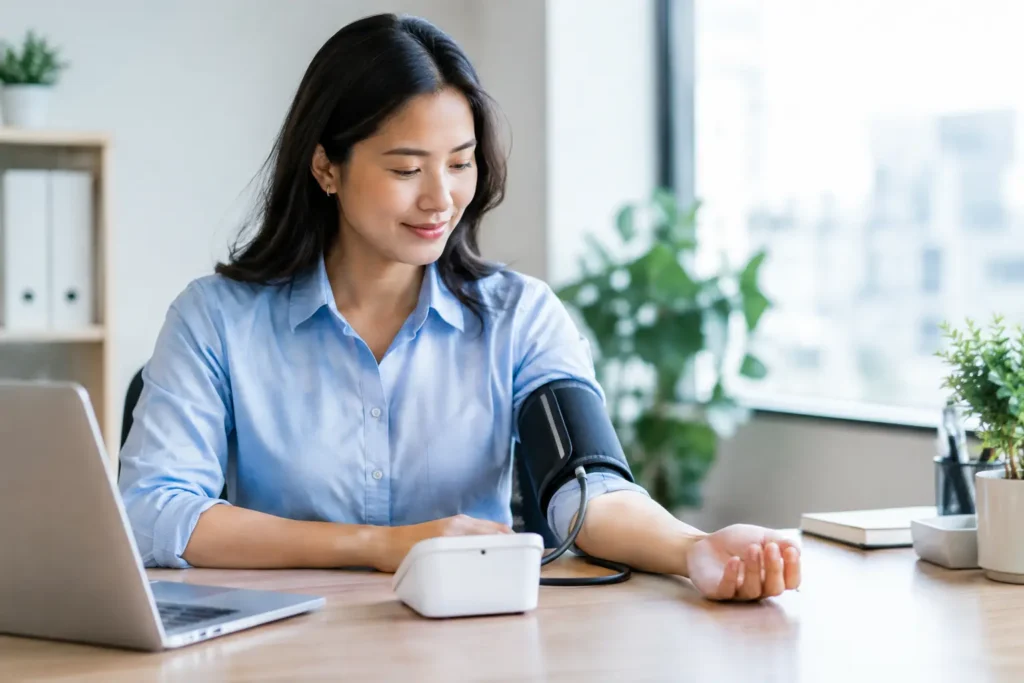
A blood pressure check takes only a few minutes, yet it can identify a health risk that employees may not feel at all. For organisations asking how often check blood pressure, the practical answer is that frequency depends on the person, their previous readings and their clinical risk factors. A convenient workplace check can help employees know their numbers and take the right next step without creating another appointment to arrange.
High blood pressure usually causes no obvious symptoms. That makes accessible screening particularly useful for busy, hybrid and multi-site teams, where preventative health can otherwise be easy to postpone. The workplace’s role is not to diagnose or treat a condition. It is to make basic checks straightforward, private and repeatable, while signposting employees to appropriate clinical support when a result needs follow-up.
How often should blood pressure be checked?
For adults with no known blood pressure concerns, a routine check at least every five years is a sensible minimum. In the UK, this is commonly covered through the NHS Health Check for eligible adults aged 40 to 74. However, five years can be a long time between opportunities to understand a changing health picture.
An annual workplace wellbeing campaign gives employees a practical chance to monitor their core metrics, including blood pressure, alongside weight, BMI, pulse and body fat percentage. It does not replace an NHS Health Check or GP care, but it can encourage earlier awareness and give employees a clear reason to arrange a clinical appointment if needed.
More frequent checks may be appropriate for people who have had a raised result before, have been diagnosed with high blood pressure, are taking medication that affects blood pressure, or have risk factors such as diabetes, kidney disease, cardiovascular disease or a family history of early heart disease. Pregnancy also requires separate clinical advice and monitoring.
For an employee already being assessed or treated by a GP, pharmacist or specialist, the clinician’s monitoring plan should take priority. They may ask for readings at home at specific times of day over several days. A single workplace reading is useful information, but it is not enough on its own to confirm high blood pressure.
Why annual workplace checks are a useful benchmark
Employers do not need to turn health screening into a medical programme to make it valuable. A yearly opportunity to check blood pressure creates a consistent, low-friction wellbeing touchpoint. It allows employees to compare their result with a previous screening, notice a trend and act before a concern becomes easier to ignore.
The main benefit is participation. Employees may intend to book a pharmacy or GP blood pressure check but struggle to find a convenient time. An on-site screening kiosk removes much of that friction. There is no appointment list to manage, no need for an HR team to chase attendance and no lengthy assessment process during the working day.
For employers, annual screening can also sit naturally within a broader wellbeing calendar. It can support a January health reset, a spring wellbeing event, Heart Month activity or an autumn benefits campaign. Organisations may choose a single screening day, a longer rental period to accommodate shifts and hybrid attendance, or a rolling programme across several sites.
The right cadence depends on workforce needs. A one-off event can generate awareness, but repeated access is more likely to support habit-building and measurable engagement over time.
When a result needs follow-up
Blood pressure changes throughout the day. Stress, recent activity, caffeine, smoking, alcohol, talking during the reading and even a full bladder can affect the number shown. That is why employees should treat a kiosk result as a prompt for awareness rather than a final diagnosis.
A reading may be higher than usual because someone has rushed from a meeting, climbed stairs or had a coffee shortly beforehand. Where possible, they should sit quietly for around five minutes before taking the measurement, keep both feet flat on the floor, support the arm and avoid speaking during the check. Taking a second reading after a short rest can give a more representative result.
As a general guide, a clinic blood pressure reading of 140/90 mmHg or above may need assessment, while home readings are typically considered raised at 135/85 mmHg or above. Thresholds and individual circumstances vary, so employees should not self-diagnose from one measurement.
An employee should contact their GP practice, pharmacist or NHS 111 for advice if repeated readings are raised, especially if this is new for them. If a reading is extremely high, such as 180/120 mmHg or above, or is accompanied by chest pain, severe headache, breathlessness, weakness, confusion or changes to vision, urgent medical help is needed. Employers should make clear that screening equipment is not an emergency service.
Making workplace blood pressure checks reliable
The quality of the setting matters as much as the equipment. A busy reception area may encourage high footfall, but it may not give employees the quiet and privacy needed for a calm reading. A suitable location should be accessible, discreet and have enough room for someone to sit comfortably while using the kiosk.
Communication should set realistic expectations. Explain what the screening covers, how long it takes and what employees receive. A good on-site health screening process captures key biometric measures in minutes and provides an immediate printed result that employees can keep for their records or discuss with a healthcare professional.
Avoid presenting participation as compulsory or framing results as a performance measure. Health information is personal. The strongest workplace campaigns make screening voluntary, clear about privacy and focused on practical next steps. Where anonymised usage data is available, it can help employers understand overall engagement without exposing individual results.
It is also worth planning for different working patterns. Shift workers, field-based staff and hybrid employees can be missed when screening happens only during a narrow lunchtime window. A longer kiosk placement, clear internal promotion and a simple location plan can substantially improve uptake.
What a health screening kiosk adds
A workplace health screening kiosk gives employees access to core measurements without the scheduling burden of one-to-one appointments. Depending on the configuration, this can include height, weight, BMI, blood pressure, pulse and body fat percentage, with results printed immediately.
That combination helps turn an isolated blood pressure number into a wider preventative health conversation. For example, an employee may see a raised reading alongside a change in weight or BMI and decide to speak with their GP, review their activity levels or use available wellbeing support. Equally, a normal result can reinforce positive habits.
For HR and wellbeing teams, operational simplicity is central. The practical requirements are usually modest: an appropriate space, access to power and clear employee communications. With delivery, installation, basic training and maintenance managed by a provider, the initiative can be deployed across UK locations without creating a complex project for internal teams.
Relaxa’s Health Screening Kiosk is designed around this model, providing immediate results and a straightforward way for organisations to offer preventative checks at scale. It can also complement wider activity such as movement sessions, stress management webinars, nutrition education and mental wellbeing support, rather than treating physical health as a one-day event.
A practical approach for employers
Start with the purpose of the screening. If the aim is awareness, an annual campaign with clear information on interpreting results may be enough. If the organisation is trying to reach a dispersed workforce or build year-round engagement, a longer screening period and supporting wellbeing activity may deliver better participation.
Before launch, decide where the kiosk will sit, who will promote it and what advice employees will receive after a result. Keep messaging factual: screening helps people understand their numbers; it does not provide a diagnosis. Give employees space to act privately, whether that means booking a GP appointment, seeking pharmacy advice or simply taking their printout home.
The most useful blood pressure check is the one an employee can access, understand and follow up appropriately. By making that process easy during the working day, employers can turn a brief measurement into a credible, practical expression of preventative care.