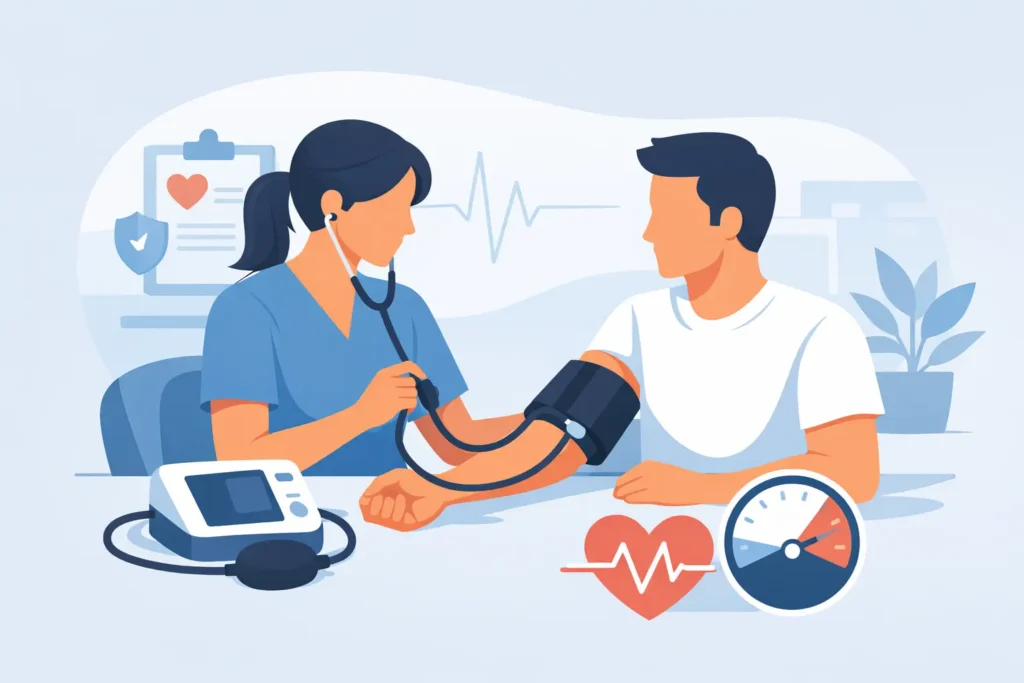
A blood pressure reading takes minutes, but it can flag a problem that has gone unnoticed for years. That is why workplace screening matters. For employers running wellbeing initiatives, the real question is not whether blood pressure checks are useful. It is how often employees should check blood pressure, and how to make that happen without adding admin, appointments or disruption.
The practical answer is that there is no single timetable for every employee. Frequency depends on age, risk factors, previous readings and whether someone already has a diagnosed condition. For employers, that means the best approach is usually to make checks easy, visible and repeatable rather than treating them as a one-off event.
How often should employees check blood pressure at work?
For generally healthy adults with no known blood pressure issues, an occasional check can be enough to stay aware of their baseline. In workplace terms, that often means offering screening a few times a year or providing access often enough that employees can check when it suits them.
If an employee has had a borderline or high reading before, more regular monitoring makes sense. The same applies if they have risk factors such as being over 40, carrying excess weight, smoking, living with high stress, having a family history of hypertension, or managing conditions such as diabetes.
As a working rule for wellbeing programmes, employers can think in three broad groups:
- employees with no known concerns may only need periodic checks
- employees with raised or borderline readings may benefit from checking more frequently over a short period
- employees with diagnosed high blood pressure should follow clinical advice from their GP or care team rather than relying on a workplace schedule alone
That distinction matters. A workplace blood pressure check is valuable for awareness and early identification, but it does not replace medical diagnosis or treatment.
Why frequency depends on the employee, not just the programme
Blood pressure is not a static number. It can change with stress, caffeine, poor sleep, inactivity, medication, illness and time of day. That is one reason one-off screening events have limits. They are useful for engagement and awareness, but they only capture a snapshot.
For employers, this creates a practical challenge. If screening access is too infrequent, employees may miss opportunities to spot a pattern. If it is too intensive, participation can drop because it feels inconvenient or unnecessary.
A more effective model is to give employees simple access to checks during working hours, without the need to book slots or travel off-site. When staff can complete a reading quickly and privately, uptake tends to be stronger, especially among people who would not otherwise make time for a health appointment.
What a sensible workplace screening rhythm looks like
For most organisations, the right answer is not weekly campaigns or annual tokenism. It sits somewhere in the middle.
A practical rhythm is to build blood pressure checks into a wider annual wellbeing plan, while allowing employees to check more than once. That could mean a dedicated screening period each quarter, a wellbeing week each season, or longer access through an on-site kiosk that staff can use over several days or weeks.
This matters because repeat access supports better judgement. If an employee gets an unexpectedly high reading once, the immediate value is not panic. It is the opportunity to recheck at another time, under calmer conditions, and decide whether they should speak to a healthcare professional.
For HR and People teams, that repeatability also improves the quality of the initiative. Instead of a single attendance spike, you create an environment where employees can engage when they are ready.
When more regular checks make sense
Some employees are more likely to benefit from checking blood pressure more often. That includes people who already know they have elevated readings, those returning to work after illness, and those whose roles involve high pressure, long hours or sustained sedentary time.
Older employees may also need closer attention, as blood pressure risk rises with age. Equally, younger employees should not be excluded. High blood pressure can affect working-age adults who feel completely well, which is part of the reason routine screening can be so valuable.
There is a balance to strike here. Employers should encourage awareness without turning screening into surveillance. The purpose is to give employees access to useful health information, not to create pressure around participation or personal data.
How to make blood pressure checks easy enough to happen
The biggest barrier is rarely lack of interest. It is friction.
If employees have to book appointments, leave site, wait for an available clinician or fit around a limited event window, many will not take part. That is why convenient workplace delivery matters so much. A screening option that can be set up on-site, needs only a suitable space and power supply, and lets employees complete a quick self-service assessment is far easier to integrate into a normal working day.
That convenience changes the answer to how often should employees check blood pressure. If access is simple, employees can check when it is appropriate for them rather than when the calendar allows.
For employers, this approach also reduces administrative burden. There is no need to manage high volumes of appointments, and participation is not restricted to those who are free at a specific time. In larger or multi-site organisations, that matters even more.
Why one reading should not be over-interpreted
Blood pressure can be affected by temporary factors. Someone may have rushed up stairs, had a strong coffee, felt anxious about the test or simply be having a stressful morning. A single raised result is useful, but it is not the whole story.
That is why employees should be encouraged to treat readings as information, not a verdict. If a result is higher than expected, the sensible next step is usually to rest, recheck at another time and seek GP advice if readings remain raised.
This is another reason regular access is better than occasional campaigns. It allows employees to compare readings over time rather than reacting to one isolated number.
The employer’s role in getting the balance right
Most employers are not trying to become healthcare providers. They are trying to remove barriers to preventive action. That means offering checks in a way that is practical, low-friction and credible.
A well-run screening setup should make clear what is being measured, how long it takes and what the employee gets from taking part. If staff receive immediate results and can understand them straight away, the screening is more likely to lead to action.
This is where workplace health screening can work especially well when it is part of a broader wellbeing offer. Blood pressure does not sit in isolation. It links with weight, BMI, activity levels, sleep, stress and nutrition. When employees can see several measures together, the conversation becomes more useful and more grounded in prevention.
For organisations that want scale without complexity, an on-site solution such as a health screening kiosk can remove many of the usual delivery barriers. Employees can complete core checks including blood pressure in minutes, receive immediate printed results, and do so without a clinician appointment. For HR teams, that means stronger participation potential with less scheduling and less operational disruption.
How often should employees check blood pressure if you are planning a wellbeing campaign?
If you are designing a workplace programme, the most effective answer is usually this: often enough for employees to build awareness, and flexibly enough for higher-risk staff to recheck when needed.
In practice, that means avoiding a one-and-done approach. Give employees more than one opportunity across the year. Make the checks easy to access during work time. Position blood pressure as one part of a broader preventive health picture rather than a standalone metric.
For some organisations, a quarterly rhythm will be right. For others, a longer on-site access window will deliver better uptake because staff can participate without rushing. The right model depends on workforce size, shift patterns, site layout and whether you need to serve one office or multiple locations.
The common thread is convenience. If the process is simple, employees are more likely to know their numbers. If they know their numbers, they are more likely to spot changes early and seek support when needed.
That is the real value of workplace screening. It turns a vague intention to look after health into something immediate, visible and easy to act on – which is often the difference between low engagement and a wellbeing initiative that genuinely gets used.