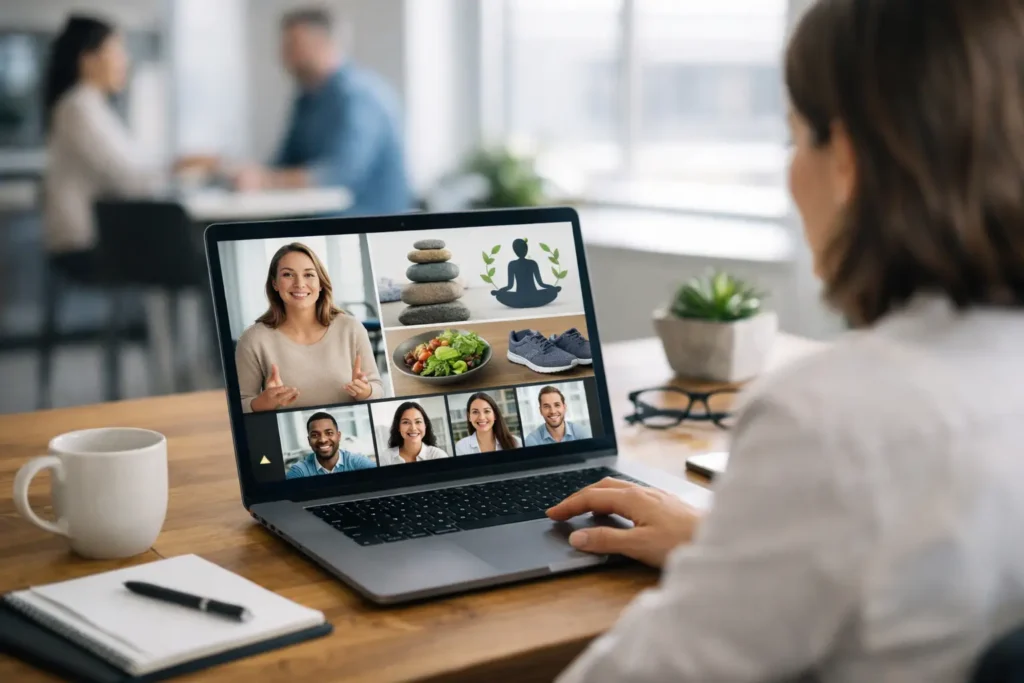
A wellbeing webinar can be easy to book and still fail to make a useful difference. Employees may attend because it is in their calendar, but switch off if the content feels generic, poorly timed or disconnected from the pressures they face at work. Knowing how to choose wellbeing webinars means looking beyond the topic title and selecting sessions that are relevant, accessible and straightforward to run.
For HR and People teams, the best webinar programme should reduce admin rather than create it. It should give employees practical information they can use the same day, support wider wellbeing priorities and produce clear participation data to help shape future activity.
Start with the workplace need, not the webinar catalogue
A broad catalogue is useful, but it should not dictate your programme. Begin by identifying what employees need most at this point in the year. This may come from engagement surveys, absence trends, feedback from managers, occupational health insights or participation in previous wellbeing activities.
For example, a busy period of change, restructuring or high workload may call for webinars on stress management, resilience and mental health awareness. If employees are returning to the office, posture, movement and healthy routines may be more useful. A workforce reporting poor energy levels or long-term fatigue may benefit from sessions on sleep, nutrition and sustainable daily habits.
Avoid assuming that one topic will meet every need. A financial year-end webinar on managing pressure might be highly relevant for finance and operational teams, while a session on sleep could achieve stronger engagement across a wider workforce. The right choice depends on both the issue and the audience.
It is also worth separating awareness from action. A webinar on mental health awareness can improve understanding and help people recognise when support may be needed. A practical stress session should go further, giving attendees techniques for managing workload, boundaries, breathing or recovery time. A balanced programme includes both.
Choose wellbeing webinars with a clear employee outcome
Each webinar should answer a simple question: what will employees be able to understand, decide or do after attending?
Vague outcomes such as “promoting wellness” make it difficult to communicate the value of a session or assess whether it worked. Look for specific, workplace-relevant outcomes. These might include recognising early signs of stress, building a better wind-down routine for sleep, adjusting a workstation to reduce discomfort, or understanding how food choices affect energy through the working day.
Practicality matters. Employees are more likely to value a session when the advice works in a normal working week, rather than requiring expensive equipment, large blocks of free time or a complete lifestyle overhaul. A good presenter translates health information into realistic actions for office-based, hybrid, remote and frontline employees.
Ask providers how the webinar is structured. A clear session normally includes concise expert input, relatable examples, practical techniques and time for questions. The tone should be informative without becoming clinical, judgemental or overly personal. Wellbeing is not one-size-fits-all, so attendees should leave with options they can adapt to their circumstances.
Match the format to your workforce
The format can affect attendance as much as the subject. A live webinar creates a shared moment and gives employees the opportunity to ask questions, which can be especially valuable for sensitive topics such as stress, menopause or mental health. However, live sessions can be difficult for shift workers, customer-facing teams and employees across multiple sites.
Recorded webinars provide flexibility and can extend the life of your investment. They allow people to watch at a convenient time, but may achieve lower completion rates without a clear internal promotion plan. For many employers, the most effective approach is to run a live session and make a recording available afterwards, where appropriate and agreed with the presenter.
Consider length carefully. A 30-minute session can work well for focused topics, lunchtime learning and busy teams. A 45- or 60-minute webinar allows more room for explanation and questions, particularly where the subject needs care and context. Longer is not always better. If the objective is to encourage a simple healthy habit, a concise session may have greater impact than an hour of theory.
Accessibility should be built into the selection process. Check whether captions, downloadable resources and accessible presentation materials are available. Think about the language used, too. Plain English is essential where employees have varied health knowledge or where English is not everyone’s first language.
Check the presenter’s credibility and workplace experience
A confident speaker alone is not enough. Employees need advice they can trust, and employers need reassurance that sessions are appropriate for a workplace setting.
Ask about the presenter’s professional background, relevant qualifications and experience delivering to employee audiences. For clinical or mental health subjects, ensure content is delivered by a suitably qualified professional and that the boundaries of the session are clear. A webinar can provide education and signposting, but it is not a replacement for medical advice, counselling or clinical treatment.
Workplace experience matters because employees face practical constraints. A presenter who understands deadlines, hybrid meetings, sedentary work and competing home responsibilities is more likely to offer credible guidance. They should be able to engage a mixed audience without making assumptions about people’s fitness, health status, age or personal circumstances.
It is sensible to ask for a session outline before booking. This helps you check that the content is suitable, inclusive and aligned with your internal policies. It also makes internal promotion easier because you can tell employees exactly what they will gain from attending.
Plan for participation before you book
Even an excellent webinar needs a simple participation plan. Decide who the session is for, when they are most likely to attend and how managers will support attendance. A webinar scheduled during a peak operational period may create frustration rather than engagement, however relevant the topic is.
Promote the session early, then send a short reminder closer to the date. Keep the message practical: state the topic, duration, who will present and what employees will take away. Phrases such as “learn three ways to improve sleep” are often more effective than broad statements about wellbeing.
Manager support can make a significant difference. Where managers are encouraged to protect the time and attend themselves, employees are more likely to see wellbeing activity as a legitimate part of working life rather than an optional extra to fit around their workload.
Privacy also needs consideration. For sensitive sessions, make it clear whether questions can be submitted anonymously and whether attendance information will be shared. Employees should feel able to engage without worrying that a personal health concern will become visible to their manager or colleagues.
Measure value without making reporting complicated
Webinar attendance is useful, but it is only one measure. A high registration figure does not necessarily mean that employees found the session helpful, while a smaller session may have strong value for a specific group.
Use a short post-webinar survey to gather feedback on relevance, usefulness and confidence to take action. One or two open questions can reveal which themes employees want next. You might ask what attendees found most useful and what wellbeing topic would support them over the coming months.
Review this feedback alongside practical delivery data: registrations, attendance, recording views and questions asked. Over time, these measures can show whether employees prefer live learning, shorter sessions, particular topics or certain times of day. This allows you to refine the programme instead of repeatedly commissioning webinars based on guesswork.
For a broader wellbeing strategy, connect webinars to other available support. A session on preventative health can sit alongside on-site health screening, helping employees understand metrics such as blood pressure, BMI and body fat percentage and encouraging them to take informed next steps. A webinar on posture may be reinforced through office movement sessions, while stress content can form part of a wider mental wellbeing calendar. Relaxa can support this joined-up approach with webinars, online learning and on-site wellbeing services.
Build a programme, not a one-off event
One-off webinars can create a useful awareness moment, particularly for awareness dates or seasonal pressures. Lasting engagement is more likely when employees can see a consistent programme that covers different aspects of wellbeing through the year.
A sensible annual plan might balance mental wellbeing, physical health and preventative health topics. It should allow room to respond to emerging needs, rather than fixing every session too far in advance. Seasonal timing can help: sleep and resilience sessions may suit darker winter months, while movement, nutrition and healthy routines can support a return from holiday periods.
Most importantly, choose sessions that respect employees’ time and reflect the reality of their working lives. When a webinar is relevant, practical and easy to access, it becomes more than a calendar invitation. It gives people a manageable reason to pause, consider their health and take one useful action.