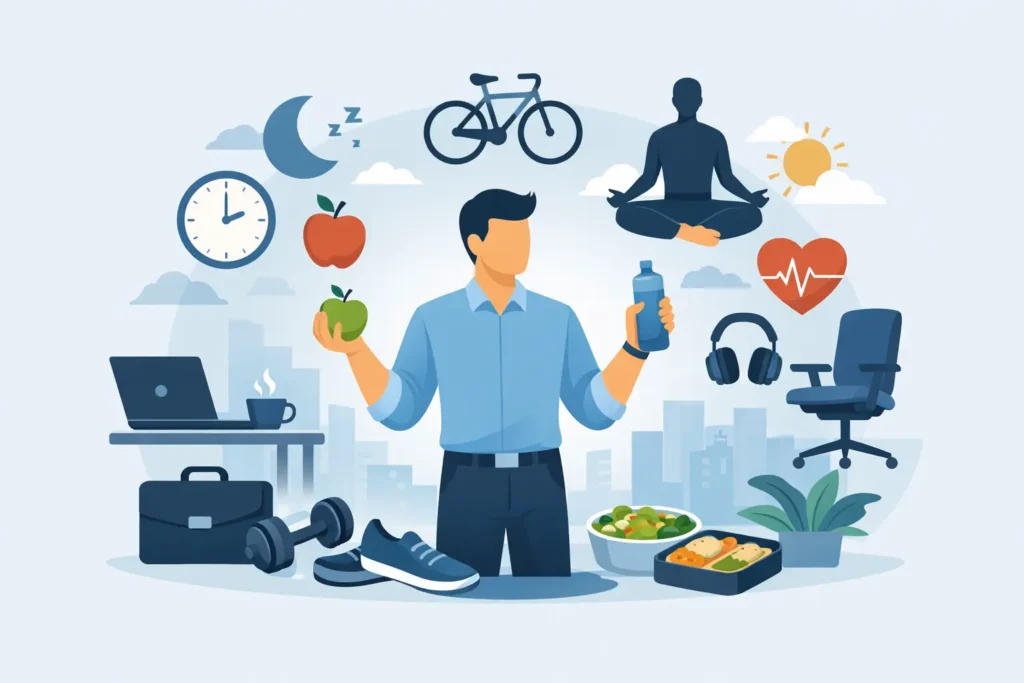
If men’s health support at work only gets attention once a year, uptake is usually patchy and impact is hard to measure. The employers that see better participation tend to do something simpler – they make health support easy to access during the working day, with minimal booking, clear messaging and visible follow-through.
For HR teams and wellbeing leads, the best ideas for mens health at work are not the most complicated. They are the ones employees will actually use. That usually means short, practical interventions that fit around work and give people something immediate, whether that is a health reading, a useful conversation or a clear next step.
Ideas for mens health at work that get used
A good place to start is with basic health checks. Many men will engage more readily with a straightforward, private screening than with a broad wellbeing campaign. On-site screening works well because it removes the friction of arranging appointments elsewhere and gives instant feedback. A workplace kiosk that measures height, weight, BMI, blood pressure, pulse and body fat percentage can support a simple know-your-numbers message while keeping delivery manageable for the employer. If blood pressure is a priority, a focused approach such as Workplace Blood Pressure Screening can be especially relevant.
Education also matters, but it needs to be specific. A men’s health webinar tends to work better than generic wellbeing content because it addresses common barriers directly – delayed help-seeking, uncertainty about symptoms, stress, sleep, weight and cardiovascular risk. For multi-site and hybrid teams, a webinar can create consistent reach without the logistics of arranging multiple in-person sessions. If that is your route, Why a Mens Health Webinar Works at Work covers the case in more detail.
Another strong option is to build men’s health into existing awareness dates. This gives internal communications a natural hook and helps managers explain why the activity is happening now. The key is not to treat awareness month as a one-off event. Use it as the start of a wider programme that includes screening, education and follow-up. Campaign planning is often more effective when tied to a practical workplace action, which is why many employers use Mens Health Awareness Month to launch something tangible rather than just send a poster.
Make access easy, not worthy
Convenience has a direct effect on participation. If support involves long forms, off-site travel or limited appointment slots, many employees will put it off. On-site services remove much of that drop-off. A health screening kiosk, for example, can be placed in a suitable workplace area with a standard power supply and used by multiple employees in a day without a diary full of appointments. That matters for busy offices, depots and mixed-shift workplaces where time is limited.
Privacy is another practical point. Men may be less likely to engage if the format feels public or awkward. Self-directed screening, short one-to-one touchpoints and digital learning options often perform better than anything that asks people to disclose too much in a group setting. This is one reason employers increasingly look at tools such as a Health Screening Machine for Workplaces – the process is quick, familiar and easy to repeat.
Go beyond screening with sessions that support daily habits
Health data is useful, but it is only one part of the picture. Men’s health at work should also address the everyday issues that affect concentration, energy and long-term risk. Stress, poor sleep, low activity levels, posture problems and inconsistent nutrition all show up in performance and absence, even when employees do not actively frame them as health concerns.
That is where a broader wellbeing programme helps. Short webinars on resilience, sleep or mental health awareness can sit alongside office yoga, movement sessions or posture support. These are not extras for the sake of it. They give employees practical ways to respond after a screening or awareness campaign has started a conversation. Someone who sees a raised blood pressure reading may need more than information – they may need support to manage stress, move more regularly and build healthier routines.
There is also value in thinking about language. Some workplaces get better engagement by leading with themes such as energy, fitness for work, sleep or knowing your numbers, rather than relying only on the phrase men’s health. The aim is the same, but the route in can differ depending on workforce culture.
What a workable employer plan looks like
For most organisations, the most effective approach is a simple mix of screening, education and follow-up across the year. Start with one measurable activity, such as on-site biometric checks. Add one or two targeted webinars relevant to your workforce, such as stress, sleep or men’s health awareness. Then support visibility through internal messaging, manager signposting and a clear explanation of what employees can expect.
Operational simplicity matters here. Buyers want to know what is required on-site, how much space is needed, whether power is required, how support is handled and what the employee experience looks like. Low-friction delivery is often the difference between a wellbeing idea that gets approved and one that stalls in planning.
Relaxa’s model reflects that reality: practical workplace delivery, UK-wide support and services that can be used as standalone activity or part of a wider wellbeing calendar. For employers reviewing ideas for mens health at work, that is usually the right test – choose options that are easy to deploy, easy to understand and easy for employees to use during the day.
If the initiative feels accessible from the start, participation is more likely to follow.