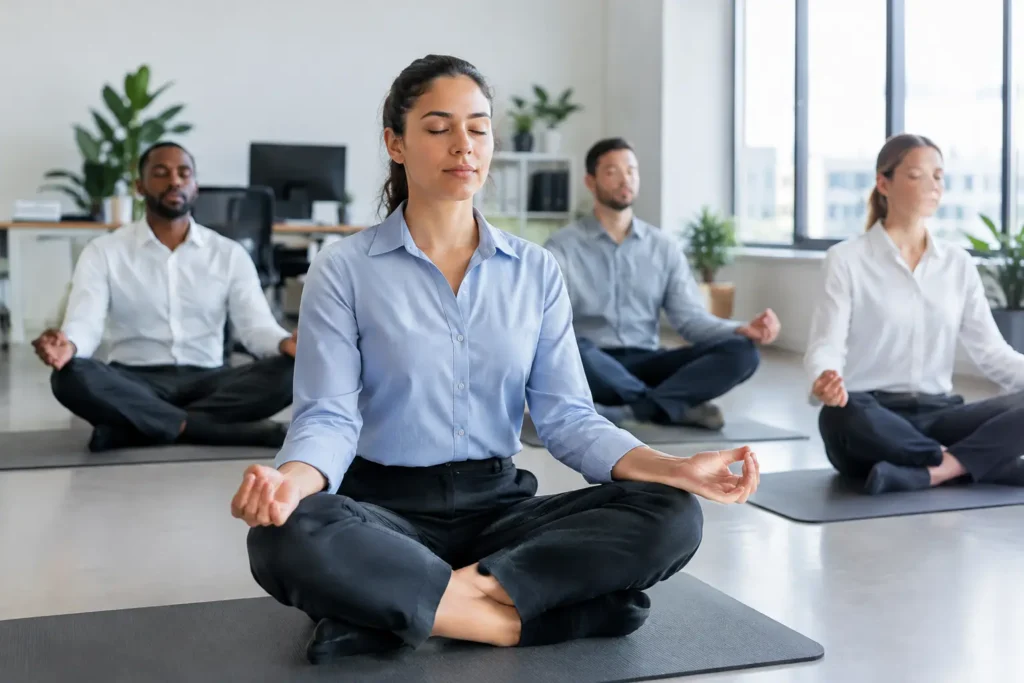
A diary full of video calls can leave employees stiff, distracted and still seated long after their concentration has started to dip. Office yoga classes create a practical reset within the working day: a short, guided session that encourages movement without requiring changing rooms, specialist equipment or travel to a gym.
For employers, the value is not simply providing a pleasant perk. Well planned sessions can make a wider wellbeing programme more visible, give people an accessible way to manage everyday tension, and show a practical commitment to supporting health at work. The key is to make the service easy to join and straightforward to deliver.
What office yoga classes look like in practice
Workplace yoga is designed for real working environments, not a studio. Sessions can be held in a meeting room, breakout area or other clear space, with employees wearing their usual work clothes. A qualified instructor adapts the class around the group, using simple standing, seated and floor-based movements where appropriate.
The format should reflect the workforce and the space available. A 20 to 30-minute movement session may work well as a mid-morning break or between meetings. A 45-minute class can suit a regular wellbeing slot for teams with more time. For hybrid and multi-site organisations, live online classes can give remote employees the same opportunity to take part.
There is no single best format. A large office with an active wellbeing calendar may benefit from weekly sessions and a mix of in-person and online delivery. A business introducing workplace wellbeing for the first time may prefer a one-off event or a short programme linked to a health campaign. Participation, shift patterns and available room space all affect the right choice.
Why movement belongs in a workplace wellbeing plan
Many desk-based employees spend much of the day in one position. Even where staff understand the benefits of moving more, the gap between meetings and workload pressures can make it difficult to act on that knowledge. Bringing an instructor into the workplace removes several common barriers: finding a class, travelling there and fitting it around the day.
Office yoga classes are not a substitute for medical advice, treatment or an ergonomic workstation assessment. They can, however, support healthier daily habits by helping employees notice stiffness, take a proper screen break and build movement into their routine. The immediate outcome is often simple: people return to their desks feeling more alert and less physically tense.
For HR and People teams, sessions also offer a visible, inclusive touchpoint. Unlike initiatives that depend on employees completing a course in their own time, a scheduled class creates a shared moment in the working week. This can be particularly useful when employees are dealing with high workloads, organisational change or the pressures of hybrid working.
Planning sessions for strong participation
Convenience is the biggest factor in uptake. A class held at the wrong time or in a room that is difficult to reach may attract only employees who already exercise regularly. The objective is to make the first session feel approachable for people who may not see themselves as yoga participants.
Choose a location that is familiar, private enough for employees to feel comfortable and large enough for the planned group. Clear the floor area before the instructor arrives, allow room for people to move safely and consider whether chairs are available if a chair-based format is required. It is sensible to check noise levels too, particularly in open-plan offices or shared buildings.
Timing needs equal attention. Lunchtime can be popular, but it is not automatically the best option if employees routinely eat at their desks or need to attend external meetings. Mid-morning and mid-afternoon classes can encourage a genuine break. Where the workforce operates shifts, rotate times or offer more than one session so the same group is not always excluded.
Communications should be clear and reassuring. Tell employees how long the class will last, what they should wear, whether they need to bring anything and that the session is suitable for beginners. Avoid presenting it as a performance activity. The message should be that employees can work within their own comfort level and speak to the instructor about any relevant limitations.
What employers should ask a provider
A workplace session is only low-admin when the delivery is properly managed. Before booking, establish what the provider supplies, what the instructor needs on arrival and how many participants the chosen room can safely accommodate. Most organisations need a clear answer on set-up time, equipment, cancellation arrangements and whether sessions can be adapted for online delivery.
It is also worth asking how the instructor manages varied confidence and ability levels. An experienced workplace instructor will provide options rather than assume everyone can move in the same way. This matters for inclusivity, but it also helps avoid the common concern that yoga is only for flexible or highly active employees.
For larger organisations, a national service model can reduce the burden of sourcing and managing separate local instructors. Relaxa provides office yoga and movement classes alongside wider on-site and online wellbeing services, allowing employers to plan activity across the year rather than treating each event as a standalone task.
Link classes to wider wellbeing activity
Yoga sessions work best when employees can see how they fit into a wider programme. For example, a movement class can support a posture awareness campaign, a stress management webinar or a period of health screening. The connection should be practical rather than overly promotional: a screening result or a conversation about wellbeing can prompt employees to consider small, achievable changes to their working routine.
An on-site health screening kiosk can provide employees with convenient checks of height, weight, BMI, blood pressure, pulse and body fat percentage, with immediate printed results. Yoga does not change these measures overnight, and employers should not present it that way. The benefit lies in giving people more than one route into wellbeing: accessible information about their health, paired with opportunities to move, learn and build positive habits.
This combined approach also helps sustain engagement. A single class can generate interest, but regular touchpoints give employees repeated opportunities to take part when their workload allows. Programmes can include movement sessions, mental health awareness training, sleep and resilience webinars, nutrition content and preventative health checks according to the needs of the organisation.
Measure what is useful
Not every wellbeing activity needs a complex evaluation framework. For office yoga, start with practical measures: registrations, attendance, repeat participation and employee feedback. These show whether the timing, location and session length are working.
Short follow-up questions can add useful context. Ask whether employees found the session accessible, whether they would attend again and whether the time slot was suitable. If attendance is lower than expected, adjust the format before deciding that the activity is not valued. A chair-based class, shorter session or different time of day can materially change uptake.
Where wellbeing programmes include screening, learning and movement, anonymous participation data can help employers identify which services employees are using. That supports more informed planning while respecting individual privacy. The aim is not to judge employees’ health choices, but to ensure the organisation is investing in services people can realistically access.
Make the first session easy to join
The most effective workplace wellbeing services remove friction. Employees should know where to go, what to expect and that they do not need prior experience. Managers can support attendance by protecting the time rather than treating the class as something staff must fit around an unchanged workload.
A well-timed yoga session will not solve every cause of workplace stress or discomfort. It can give employees a useful pause, however, and that pause is often where a more sustainable wellbeing routine begins.