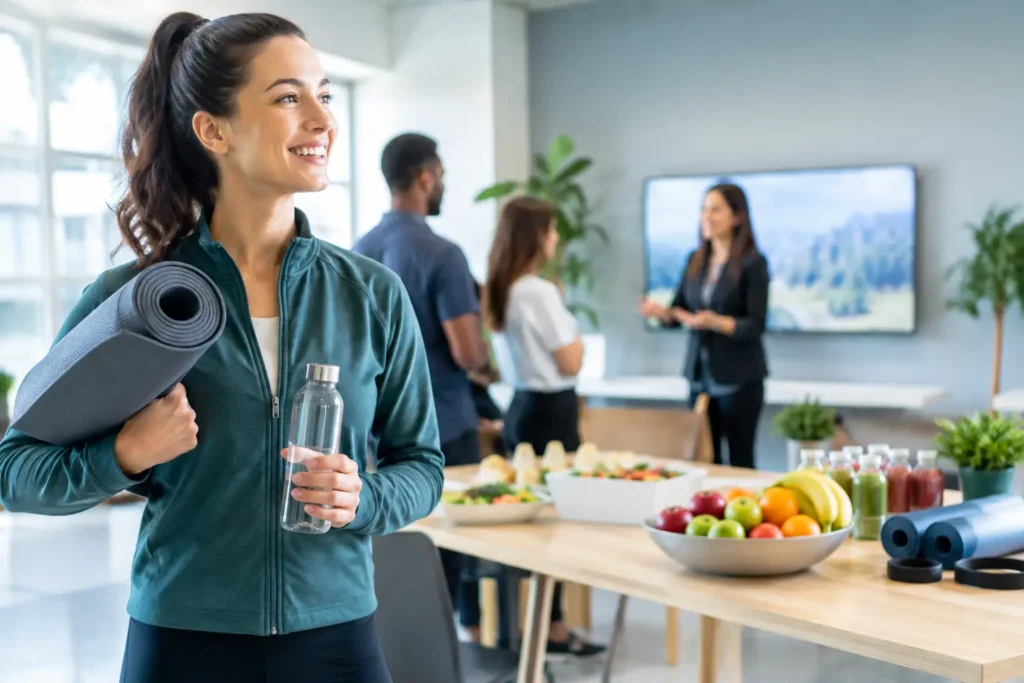
A well-attended wellbeing day is rarely the result of a long list of activities. It comes from making participation easy, relevant and confidential. To prepare a workplace wellness event that employees will actually use, focus first on practical access: a clear purpose, convenient timing, visible leadership support and services that can be used in minutes rather than booked weeks ahead.
For many UK employers, the strongest starting point is a simple preventative-health message: know your numbers. An on-site health screening kiosk can give colleagues immediate information on core measurements during the working day, while movement, massage, nutrition or mental wellbeing sessions add useful routes into the wider conversation. The event then becomes more than a one-off perk. It creates a practical prompt for employees to consider their health and gives HR a clear, manageable way to demonstrate duty of care.
How to Prepare a Workplace Wellness Event
Start by deciding what the event needs to achieve. A workplace wellness event can be designed to raise awareness, support a specific wellbeing campaign, improve engagement at a challenging time of year or introduce a longer-term programme. Those objectives will shape the right format.
If your priority is broad participation, choose services that employees can access around meetings, shifts and breaks. Drop-in health screening is often more practical than a diary of individual appointments, particularly for larger offices and multi-site organisations. If the aim is stress awareness, short sessions on resilience, sleep or mental health awareness may be more appropriate. For a team that spends long periods at desks, office yoga, posture education or movement breaks can directly reflect everyday working patterns.
Avoid trying to cover every wellbeing topic in one event. A busy programme may look impressive on paper but can dilute attendance and create avoidable admin. One clear theme, supported by two or three complementary activities, is usually easier to communicate and easier for employees to act on.
Set outcomes before choosing activities
Define what success looks like in terms that can be reviewed afterwards. It could be the number of employees who take part, uptake across different departments, feedback on confidence in managing health, or use of follow-up learning resources. If screening is included, anonymised usage information can help show how widely the service was accessed without identifying individual employees.
Be realistic about what an event can measure. A health screening day is not a diagnostic service and should not be presented as a substitute for clinical care. Its value is in giving people a convenient opportunity to understand basic measurements, consider lifestyle factors and seek appropriate professional advice where necessary. Clear wording protects employees and keeps expectations proportionate.
Build the event around access, not admin
The best workplace wellbeing events remove the usual reasons for non-participation: no time, uncertainty about what will happen, concerns about privacy, or difficulty finding a suitable appointment. Make the experience straightforward from the first announcement.
Choose a location employees already pass through, while allowing enough privacy for the activity involved. A meeting room near the main office area may work well for health screening or massage, whereas a larger open space may suit a short movement class. Consider the needs of hybrid staff and shift workers too. An event held only between 10am and 2pm may exclude the very people you want to reach, so extended hours, repeat sessions or a complementary online webinar can improve fairness of access.
For a health screening kiosk, confirm the available floor space and a standard power supply before the booking is finalised. A provider should be able to advise on delivery, installation, basic user guidance, maintenance and collection, so the internal team is not left managing equipment. This is particularly useful where HR teams are coordinating several priorities or where the event is being delivered across UK locations.
Employees should also know that their individual results are private. Position the screening area so people do not feel observed, explain what data is and is not shared with the employer, and give staff time to read their printed results away from queues. Trust has a direct effect on uptake.
Explain what employees will receive
Vague invitations such as “wellbeing day coming soon” tend to generate curiosity but not action. Give colleagues a reason to attend by setting out exactly what is available, how long it takes and whether booking is required.
For example, a screening kiosk can measure height, weight, body mass index (BMI), blood pressure, pulse and body fat percentage. It prints results immediately, allowing employees to take away a clear record of their measurements. Each metric has a straightforward preventative-health role. Blood pressure and pulse offer a useful snapshot of cardiovascular health; height and weight calculate BMI; and body fat percentage can add context that weight alone cannot provide.
Use careful language when communicating these measures. BMI is a screening indicator, not a complete judgement on an individual’s health, and body composition varies between people. The purpose is to help employees become more informed, not to label results as good or bad. Where results cause concern, encourage staff to contact their GP, pharmacist or another appropriate health professional.
Create a simple communications plan
Participation usually depends on more than one message. Announce the event early enough for employees to protect time in their diary, then send a short reminder closer to the date with practical details. Managers can help by explicitly allowing time to attend rather than leaving staff to assume they must fit it around a full workload.
Keep the message factual and reassuring. State the date, location, timings, activity length and whether people can drop in. For screening, explain that there are no appointments to arrange if that is the chosen model, that results are printed immediately, and that individual results remain private. A brief explanation of the measurements makes the service feel useful rather than intimidating.
Senior leaders and wellbeing champions can encourage attendance, but the tone matters. Employees should never feel pressured to share health information or take part. Voluntary engagement produces more meaningful participation and supports a positive wellbeing culture.
Plan the event-day flow
A smooth event day needs a named internal contact, even when delivery and technical support are handled by the provider. That person can arrange building access, confirm the location, direct employees and resolve small issues such as room changes.
Use simple signage from reception or the main entrance, especially in larger buildings. If several activities are running, avoid placing noisy movement sessions beside confidential conversations or screening. Consider peak periods too: lunch may maximise visibility, but it can also create queues. A longer drop-in window is often more effective than concentrating everything into a short lunchtime slot.
Before the event, check these practical points with your provider and facilities team:
- the agreed room or floor location is available for the full delivery and collection period;
- there is suitable access for equipment and a nearby power supply where required;
- employees have clear information on timings, privacy and participation;
- a named contact is available on site on the day; and
- any health and safety, building access or visitor requirements have been shared in advance.
These details may sound routine, but they prevent the common problems that turn a useful event into an administrative exercise. A turnkey service model, including UK-wide delivery, installation, technical support and consumables, gives HR teams more time to focus on employee communication and engagement.
Extend the value beyond one day
The event should create a next step, even if it is a small one. Employees who receive a health snapshot may want information on nutrition, sleep, stress or activity. Those who attend a movement class may benefit from a short posture session or an online course they can complete later. Offering follow-up options makes the initial event part of a year-round wellbeing plan rather than an isolated awareness date.
This does not mean overwhelming people with resources. Select follow-up support that matches the event theme and share it a few days later, when the experience is still fresh. A short webinar on managing stress may follow a mental wellbeing campaign; practical sleep guidance may fit a winter wellbeing event; and a nutrition session can complement employees who have started thinking about their screening results.
Relaxa can combine rentable health screening kiosks with on-site wellbeing sessions and online learning, helping employers build this type of programme without coordinating multiple suppliers.
Review participation and improve the next event
Afterwards, assess what employees used, when demand was highest and which departments were under-represented. Anonymous feedback can reveal whether timing, location or the range of services affected participation. If uptake was high but queues formed, extend the screening window next time. If hybrid colleagues could not attend, add an online session or repeat the activity at another site.
The most useful workplace wellness events make healthy choices easier without asking employees to navigate complicated processes. Give people time, privacy and clear information, then use what you learn to make the next opportunity even more accessible.