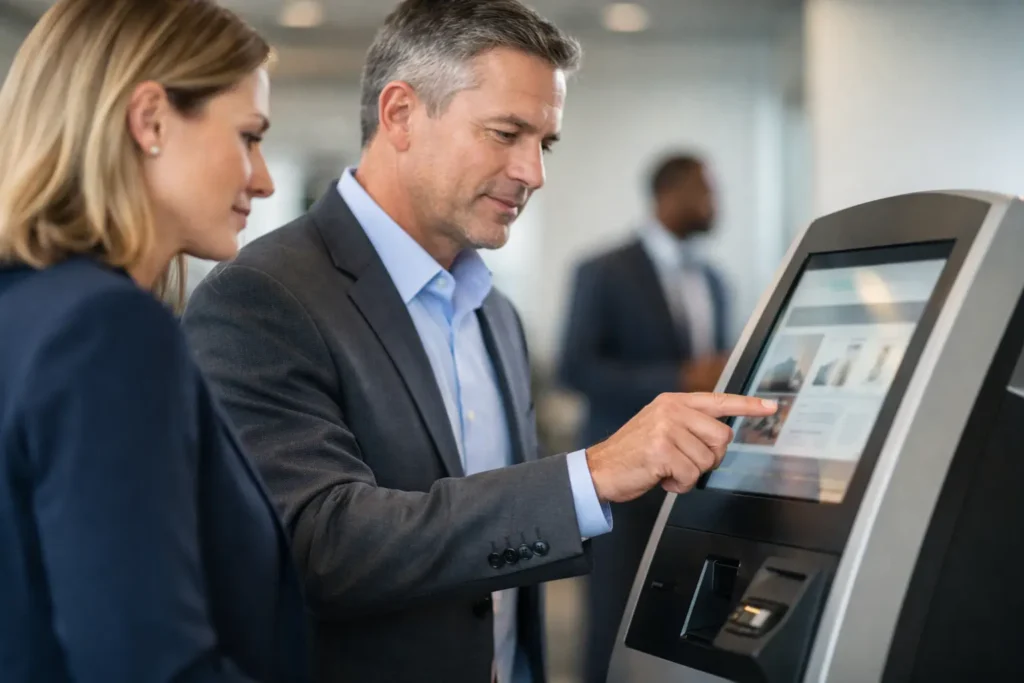
A health screening kiosk can check a colleague’s blood pressure, weight and other core measures in minutes, without the delays of appointment scheduling. But are kiosks accurate enough to support a workplace wellbeing programme? The practical answer is yes, when the kiosk is properly installed, maintained and used as instructed – with one important qualification: these checks provide useful screening information, not a clinical diagnosis.
For employers, that distinction matters. A kiosk gives employees a convenient way to understand their current numbers and spot readings that may warrant a conversation with a GP, pharmacist or occupational health professional. It is not designed to replace professional medical assessment, particularly where someone has symptoms, an existing health condition or an unexpectedly high reading.
What a workplace health kiosk measures
Workplace health screening kiosks are designed to capture a consistent set of basic biometric measurements. Depending on the model and configuration, these commonly include height, weight, body mass index (BMI), blood pressure, pulse and body fat percentage. Results can be printed immediately, so employees leave with a clear record of their reading rather than waiting for follow-up administration.
Some measurements are inherently direct. Weight is measured by the kiosk’s scales, while height is taken using its height-measurement system. BMI is then calculated from those two figures. Provided the equipment is on a level surface, calibrated and used correctly, these readings are generally straightforward and repeatable.
Blood pressure is more variable by nature. A kiosk can provide a valuable snapshot, but blood pressure changes throughout the day in response to stress, activity, caffeine, smoking, conversation and even a rushed walk up the stairs. The result is still useful, especially when it encourages an employee to check again under calmer conditions or seek advice, but it should not be treated as a final clinical verdict.
Body fat percentage is also best understood as an estimate. Many kiosks use bioelectrical impedance analysis, which is affected by hydration, recent exercise, food intake and individual body composition. It is most useful when viewed as one part of a wider picture or when an individual tracks changes over time under similar conditions.
Are kiosks accurate for blood pressure and BMI?
The accuracy of a kiosk depends on two things: the quality and maintenance of the equipment, and the conditions in which an employee takes the test.
BMI is a consistent mathematical calculation based on height and weight. It is useful as a broad population-level screening measure, but it does have limitations for individuals. For example, a very muscular employee may have a high BMI without having excess body fat. Employers should present BMI as a prompt for awareness, not a label or judgement about someone’s health.
Blood pressure needs more care. For a more representative reading, the employee should sit quietly for several minutes before starting, keep both feet flat on the floor, support their arm correctly and avoid talking during the measurement. Someone who has just exercised, had a strong coffee or feels anxious about the result may obtain a higher reading than they would at rest.
A single higher-than-expected result should therefore be repeated where possible. If it remains high, or if the employee is concerned, the printed result can help them have a more informed conversation with a healthcare professional. The same applies to a low or unusual pulse reading, particularly if it is accompanied by dizziness, chest pain, breathlessness or feeling unwell. In those circumstances, employees should seek appropriate medical advice promptly rather than relying on a repeat kiosk check.
The conditions that make results more reliable
A kiosk is not simply a piece of equipment placed in a busy reception area. Thoughtful set-up improves both participation and data quality.
Choose a private, calm area with enough room for users to sit and follow the on-screen instructions without feeling watched. A quiet meeting room, wellbeing space or screened area of a staff restaurant often works better than a high-traffic corridor. Privacy encourages employees to use the kiosk properly and gives them time to consider their results.
The kiosk should be installed on a firm, level floor and connected to a suitable power supply. This supports accurate scale readings and reliable operation. It should also be positioned where employees can access it easily during the working day, rather than needing to make a special journey or seek permission from a manager.
Clear communications help too. Invite employees to avoid testing immediately after vigorous activity where possible, and to take a few minutes to rest before a blood pressure reading. Explain what the kiosk measures, how long the assessment takes and that results are for the individual to keep. This reduces uncertainty and raises the likelihood of careful use.
Finally, equipment must be serviced and maintained. Regular checks, cleaning, replenishment of printing consumables and technical support are operational essentials, not extras. A rental provider that delivers, installs and supports the kiosk removes a significant burden from HR and facilities teams. Relaxa provides UK-wide engineering support and basic on-site training so employers can run screening events with fewer practical concerns.
Accuracy is not the same as medical diagnosis
A well-run kiosk programme gives employers a practical route to preventative health engagement. It can help employees understand measures they may not routinely know, particularly blood pressure and BMI, and it can create a useful reason to think about sleep, movement, nutrition and stress.
However, employers should avoid presenting the service as a health assessment that identifies or rules out disease. Kiosks do not replace GP appointments, NHS health checks, occupational health referrals or emergency care. They cannot account for medication, medical history, symptoms, pregnancy, recent illness or the broader clinical context that a health professional uses when interpreting a result.
This is also why workplace messaging should be supportive. The purpose is to help people know their numbers, not to monitor employees or make assumptions about fitness for work. Individual results should remain private. If an organisation wants to understand participation and plan future activity, anonymised usage data can show uptake without exposing personal health information.
Building a screening day employees will use
The best workplace screening initiatives are easy to join. Appointment-free access is particularly useful for shift workers, hybrid teams and organisations with large numbers of employees who cannot all attend at the same time. A kiosk allows people to take part around their work commitments, often in only a few minutes.
Participation improves when screening is positioned as one element of a broader wellbeing campaign. An on-site health kiosk can sit alongside sessions on nutrition, stress management, sleep or movement, giving employees practical next steps once they have seen their numbers. For instance, an employee who notices their blood pressure is higher than expected may be encouraged to review sleep habits, manage stress and arrange a professional check where appropriate.
Managers and wellbeing champions should be briefed on boundaries. They can promote the service and direct people towards appropriate support, but they should not ask employees to disclose results or attempt to interpret them. A simple signposting process is enough: repeat a reading if advised by the kiosk, speak to a pharmacist or GP for non-urgent concerns, and seek urgent medical help for serious symptoms.
A sensible way to use workplace kiosk results
Kiosk readings are most valuable when they start a useful action. For some employees, that may simply be reassurance that they have an up-to-date baseline. For others, it may mean checking blood pressure again at home or booking a clinical appointment. For the employer, it means delivering a visible, accessible wellbeing benefit without creating a complex booking system or adding unnecessary administration.
The right question is not whether a kiosk can provide a complete picture of someone’s health. No short screening can do that. The more useful question is whether it can provide reliable core measurements, in a convenient setting, that encourage timely and informed next steps. With suitable equipment, clear instructions and proper support, it can do exactly that.
Give employees the space to check their numbers privately, understand what the results mean in broad terms and know where to go if something needs follow-up. That is a practical form of preventative wellbeing – and one that can fit into a normal working day.