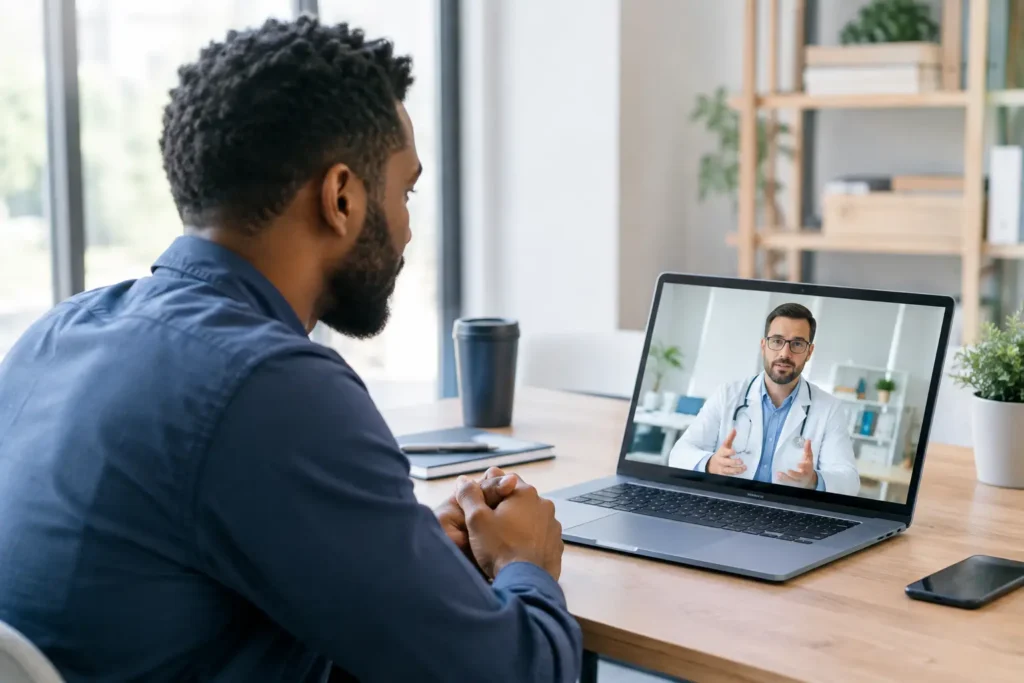
A workplace session on men’s health can easily become a low-attendance event if it feels too broad, too clinical or too personal. A well-planned men’s health awareness webinar gives employees practical, private access to reliable information during the working day, while giving HR teams a straightforward way to support preventative health.
The aim is not to diagnose employees or tell people what they should do with their bodies. It is to make health conversations more normal, help people recognise when to seek advice and give them realistic actions they can take. For employers, that makes a men’s health session a useful part of a wider wellbeing calendar rather than a one-off awareness exercise.
Why run a men’s health awareness webinar?
Men are often less likely to access preventative healthcare or discuss health concerns early. The reasons vary. Some employees may be short on time, uncertain about what symptoms matter or uncomfortable raising sensitive subjects in front of colleagues. Hybrid and remote working can add another barrier, particularly where people have fewer informal workplace conversations.
A webinar removes some of that friction. Employees can join from a private location, listen without being singled out and take away information at their own pace. A recorded option can help shift workers, field-based teams and those unable to attend live, although a live session usually creates more engagement when employees can submit questions anonymously.
For employers, the value is practical. A webinar can reach multiple sites without travel or room booking, can fit into a lunch-and-learn slot, and supports a visible duty-of-care approach. It also gives wellbeing leads a defined activity to promote around key awareness periods, including Men’s Health Week and Movember.
The strongest results come when the webinar is part of a programme. Pairing health education with convenient opportunities to act, such as on-site biometric screening, movement sessions or mental wellbeing training, helps employees move from awareness to a practical next step.
Choose a focused topic, not an overloaded agenda
“Men’s health” covers a wide range of physical and mental health needs. Trying to cover every condition in a 45-minute session can make the content feel rushed and leave attendees with little they can use. It is more effective to choose a clear theme, then show how it relates to everyday working life.
A general session may cover cardiovascular health, healthy weight, sleep, stress, movement, alcohol, nutrition and the value of knowing key health numbers. This works well for a broad audience and for organisations introducing men’s health activity for the first time.
A more focused webinar may be better where employee feedback points to a specific need. For example, a session on stress, sleep and mental health can be particularly relevant in high-pressure roles. A session on heart health and blood pressure can complement a workplace screening day. A talk on prostate, testicular and bowel health can help employees understand the importance of recognising changes and seeking professional medical advice promptly.
The right choice depends on your workforce. A younger, predominantly site-based team may respond well to practical content about fitness, sleep and early checks. An organisation with an older demographic may prefer a session that gives more attention to heart health and age-related screening. Avoid assumptions, though. A short pre-event pulse survey can help you select a topic employees genuinely want to hear about.
Keep the language factual and inclusive
A men’s health webinar should be direct without becoming alarmist. Employees need clear explanations of risk factors, symptoms that should not be ignored, and routes to appropriate support. They do not need dramatic claims, complex medical terminology or pressure to disclose personal experiences.
The session should also recognise that men are not a single group. Age, ethnicity, disability, job type, caring commitments and access to local services can all affect health behaviours and outcomes. Using inclusive language and allowing anonymous questions makes the webinar more useful for everyone who chooses to attend.
Build the session around actions employees can take
Good wellbeing education answers three questions: what does this mean, why does it matter, and what can I do next? The final question is where many awareness sessions lose momentum.
Give employees a small number of realistic actions. These might include checking blood pressure, booking a GP appointment if they notice persistent changes, improving sleep routines, adding short periods of movement to the day, or speaking to someone if stress is affecting daily life. The advice should be proportionate. Telling busy employees to overhaul their lifestyle is less likely to lead to change than suggesting one manageable step.
It also helps to explain the numbers employees may encounter during health screening. Height and weight contribute to BMI, which can be a useful starting point but is not a diagnosis. Blood pressure indicates the force of blood against artery walls and can be raised without obvious symptoms. Pulse gives a snapshot of heart rate, while body fat percentage offers additional context beyond weight alone.
On-site Health Screening Kiosks can make these measures easy to access during the workday. Employees can complete a basic check in minutes without appointment scheduling and receive immediate printed results. The result is not a medical assessment, but it can give people a prompt to consider their health and seek clinical advice where appropriate.
Make attendance easy, private and worthwhile
The operational details matter as much as the speaker. If joining the webinar requires a complicated registration process, employees are less likely to take part. Use one clear calendar invitation, make the joining instructions simple and schedule the session at a time that works across locations and shifts.
Privacy needs to be designed in from the start. Make it clear that employees do not need to turn on their camera or share personal information. Use anonymous Q&A or allow questions to be submitted in advance. This is particularly valuable for subjects such as mental health, sexual health, cancer concerns or alcohol use.
Managers have an important role. They should be encouraged to protect the time rather than treating attendance as optional work that employees must fit around an already full diary. A short message from a senior leader can increase participation, but it should focus on permission and support, not on monitoring who attends.
For organisations with employees who are not desk-based, consider a repeat session or a recording available for a defined period. Recordings improve access, but they cannot fully replace live interaction. A practical approach is to offer both: a live webinar with anonymous questions, followed by a recording and a concise follow-up resource.
Connect the webinar to year-round wellbeing activity
A single webinar can start a conversation. A planned sequence gives that conversation staying power. Consider what happens in the weeks before and after the event.
Before the webinar, use internal communications to introduce the topic without overloading employees with statistics. Keep the message simple: what the session covers, who it is for, when it takes place and why it may be useful. Avoid language that implies men need to be “fixed” or that makes attendance feel like a test of resilience.
After the session, share the key actions and signpost available workplace support. This could include an employee assistance programme, mental health first aiders, occupational health routes or a future on-site screening opportunity. If your organisation uses an on-site kiosk, communicate the practicalities clearly: where it will be located, how long checks take, what metrics are measured and that employees receive their own results immediately.
Relaxa can support this joined-up approach through online wellbeing webinars and UK-wide on-site health screening kiosk rental. The kiosk requires only suitable space and power, while delivery, installation, maintenance and basic training are handled by service technicians. For HR teams, this reduces administration while creating a visible, accessible wellbeing activity.
Measure engagement without compromising trust
Employers need evidence that wellbeing activity is being used, but personal health information must remain personal. Attendance numbers, anonymous feedback and aggregate usage data can show whether a campaign reached employees and what topics they want next.
Ask focused questions after the webinar. Did employees find the information relevant? Did the session make them more likely to check a health concern or use a workplace wellbeing service? Which future topics would they attend? Keep the survey short, optional and anonymous.
If you offer workplace screening, anonymised usage information can help you understand participation across a site or campaign period without identifying individual employees. This is useful for planning future activity, especially in multi-site organisations where uptake may differ by location, shift pattern or communication method.
A men’s health webinar works best when it respects employees’ privacy, fits their working reality and offers a clear next step. Give people useful information, make support easy to access, and let practical action – not pressure – carry the message forward.