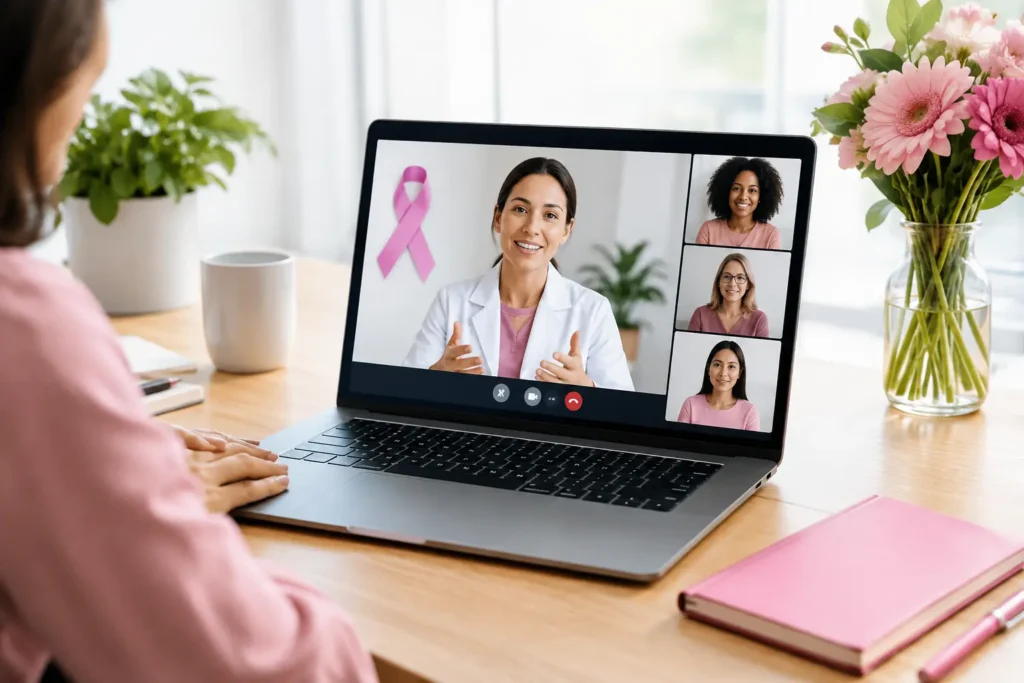
A breast cancer awareness webinar can give employees the confidence to notice changes, understand the purpose of screening and know where to seek advice. For employers, the priority is not to deliver clinical diagnosis. It is to provide accurate, respectful information in a format that is easy to access during the working day.
This works best when it forms part of a wider wellbeing programme rather than a one-off awareness date. A well-run session can support preventative health conversations, reduce uncertainty and show that your organisation takes employee wellbeing seriously, without placing pressure on anyone to share personal health information.
What a breast cancer awareness webinar should achieve
The strongest workplace webinars have a clear, limited purpose. Employees should leave knowing the broad signs and symptoms to be aware of, how NHS breast screening works, and what practical next step to take if they have a concern.
The session should make a careful distinction between awareness and reassurance. Most breast changes are not cancer, but any new or unusual change should be checked by a GP. A webinar must not imply that someone can assess their own risk or diagnose a condition through a short online session.
It should also be inclusive. Although breast cancer is much more common in women, men can develop it too. Trans and non-binary employees may have relevant concerns and may face additional barriers to accessing screening or speaking about breast health. Use language that welcomes everyone while recognising that screening invitations and individual eligibility can vary.
For a UK employer, a practical outcome is straightforward: employees know how to contact their GP, understand that screening invitations are not the only route to getting a concern checked, and feel able to use the support available to them.
Build the webinar around useful, accurate information
A 45 to 60-minute format is usually sufficient. It protects time in busy diaries while leaving room for questions. A qualified health professional or experienced wellbeing presenter should lead the clinical content, particularly where screening, symptoms and risk factors are discussed.
Start with the facts employees are most likely to need. Explain that breast cancer can affect people differently and that knowing what is normal for your own body can help people identify a change. Avoid prescribing a rigid self-check routine or suggesting that there is one “right” way to check. The key message is familiarity and prompt action when something new or persistent is noticed.
The presenter can then cover changes that warrant a conversation with a GP. These may include a new lump or swelling in the breast, chest or armpit; a change in breast size, shape or skin texture; nipple changes or discharge; or persistent, unexplained pain in the breast or armpit. Present these calmly. The aim is informed action, not alarm.
Explain screening without oversimplifying it
Breast screening is valuable, but it is not a guarantee that cancer will always be found, nor does an invitation mean someone has symptoms. In the UK, NHS breast screening is routinely offered to eligible people within a specified age range, but local arrangements, invitation timing and eligibility can change. Encourage employees to check the current NHS guidance or speak with their GP if they are unsure.
Be clear that people should not wait for a screening invitation if they have noticed a change. This is one of the most useful messages an employer can help reinforce.
A balanced session can also acknowledge that screening can feel uncomfortable or worrying for some people. Employees may have past experiences, disabilities, caring responsibilities or cultural concerns that make attendance harder. Signposting to a GP or local screening service for individual advice is more helpful than assuming every employee has the same experience.
Handle risk factors responsibly
Employees may ask why breast cancer happens. Explain that there is no single cause, and that risk is influenced by a combination of factors, including age, family history and lifestyle. Do not present lifestyle choices as a promise of prevention or imply that a diagnosis is anyone’s fault.
This is an appropriate point to discuss the value of knowing family history and raising questions with a GP where there is a significant history of breast or related cancers. Personal risk assessments belong with qualified healthcare professionals, not workplace managers or webinar hosts.
Make attendance easy across your workforce
A valuable webinar will underperform if employees cannot realistically join it. Offer a live online session at a time that works for office-based, hybrid and shift teams where possible. For multi-site organisations, a recorded version can extend access, but it should be edited carefully if it contains live questions or personal disclosures.
Promote the session in plain language. Explain what will be covered, who it is for and that there is no expectation to discuss personal experiences. Avoid messaging that relies on fear or uses awareness month activity as a reason to rush sensitive communications.
Managers play an important role. Ask them to protect attendance time, rather than treating the webinar as an optional extra employees must fit around a full workload. Small practical decisions, such as avoiding clashes with major meetings and allowing headphones in shared spaces, can significantly improve participation.
For a live session, offer anonymous question submission in advance and during the event. Many people will have questions but may not want their name visible on screen or in a chat. Set expectations that individual medical questions cannot be answered in a group setting and will be signposted to appropriate clinical support.
Protect privacy and maintain clear boundaries
Health awareness sessions can prompt disclosures. The organiser should have a simple process for handling them with care. Do not ask employees about their screening status, symptoms, family history or diagnosis. Do not use attendance data to make assumptions about health needs.
If you collect feedback, keep it focused on the quality and usefulness of the session. Anonymised participation and feedback data can help HR teams understand engagement with wellbeing activity, but it should never be used to identify individuals or monitor health behaviour.
Before the webinar, agree the boundaries with the presenter. They should explain that the session provides general information and is not a substitute for medical advice. They should also be prepared to respond compassionately if an employee shares a diagnosis, is awaiting results or becomes upset. A brief reminder of internal support, such as an employee assistance programme, can be appropriate alongside clinical signposting.
Extend awareness beyond one session
A webinar is most effective when employees have time and space to act on the information afterwards. Send a concise follow-up message that repeats the main action: contact a GP about a new or unusual breast change, rather than waiting for a screening invitation or a future workplace event.
You can also position breast health within a year-round programme covering preventative wellbeing, mental health and access to support. This avoids treating breast cancer awareness as a campaign that starts and ends in one month. It also gives employees who were unable or unwilling to attend live a less pressured way to engage later.
For organisations already running workplace wellbeing activity, schedule the webinar alongside other accessible services rather than trying to combine it with a health check. A health screening kiosk can provide immediate readings such as blood pressure, pulse, height, weight, BMI and body fat percentage, but it does not screen for breast cancer. Keeping that distinction clear protects employees from false reassurance and helps each service do its intended job.
Measure engagement, not personal health information
Employers need evidence that wellbeing activity is reaching people, particularly when budgets and time are limited. Measure practical indicators: registrations, attendance, recording views, anonymous question volume and post-session confidence ratings. Ask whether the content was clear, relevant and easy to act on.
Avoid asking whether someone has booked a screening appointment, contacted a GP or received a diagnosis. Those are private health matters. The useful organisational measure is whether you created a credible, accessible opportunity for employees to receive trustworthy information.
A thoughtful breast cancer awareness webinar does not need dramatic messaging to make a difference. Give people clear facts, protect their privacy, make attendance straightforward and ensure they know where to turn next. That is a practical form of workplace support employees can use when it matters.