A 45-minute webinar at lunchtime can look well attended on a calendar and still make little difference if employees are too busy, unsure what to expect, or unable to apply the advice afterwards. Effective virtual wellbeing activities are designed around the reality of work: varied shift patterns, back-to-back meetings, hybrid teams and different levels of confidence discussing health.
For HR and People teams, the priority is not simply offering more content. It is providing convenient, credible support that employees can access without complicated booking, travel or pressure to participate publicly. A well-planned online programme can extend wellbeing provision across sites, support home-based colleagues and reinforce on-site services throughout the year.
What virtual wellbeing activities should achieve
Virtual activities work best when they solve a defined workplace need. A stress-awareness session may help managers recognise early signs of overload. A sleep webinar can give employees practical ways to improve recovery. A short movement class can break up sedentary working days. These are different outcomes, so they should not be delivered or measured in the same way.
Start by identifying the issue your organisation wants to address. This may come from absence data, employee surveys, occupational health themes, engagement feedback or seasonal pressure points. For example, a financial year-end may call for stress and resilience support, while a return-to-office period may create a need for posture, movement and healthy routine sessions.
The strongest programmes combine awareness with action. Employees should leave with one or two realistic changes they can make, rather than a long list of health targets. This is particularly important for online learning, where attention is limited and home environments vary greatly.
Virtual wellbeing activities that fit working patterns
A balanced programme usually includes a mix of live sessions, on-demand learning and opportunities for personal reflection. Live delivery creates momentum and gives employees a chance to ask questions. Recorded training offers flexibility for colleagues who work shifts, travel, provide customer cover or cannot attend at a fixed time.
Webinars for practical health education
Webinars are useful when a qualified presenter can explain a subject clearly and address common questions. Stress management, mental health awareness, resilience, nutrition, sleep and desk posture are all well suited to this format.
Keep the session focused. A 30 to 45-minute webinar with a clear topic is often easier to promote and attend than a broad, hour-long presentation on general wellbeing. Where appropriate, offer a recording afterwards, but do not rely on recordings alone. A live date creates a reason to make time for wellbeing during the working week.
Employees are more likely to engage when the description states what they will gain. “Sleep webinar” is less compelling than “practical ways to switch off after work and improve sleep routine”. Set expectations honestly: a webinar can provide education and coping tools, but it is not clinical treatment or a substitute for individual medical advice.
Online movement, yoga and stretch sessions
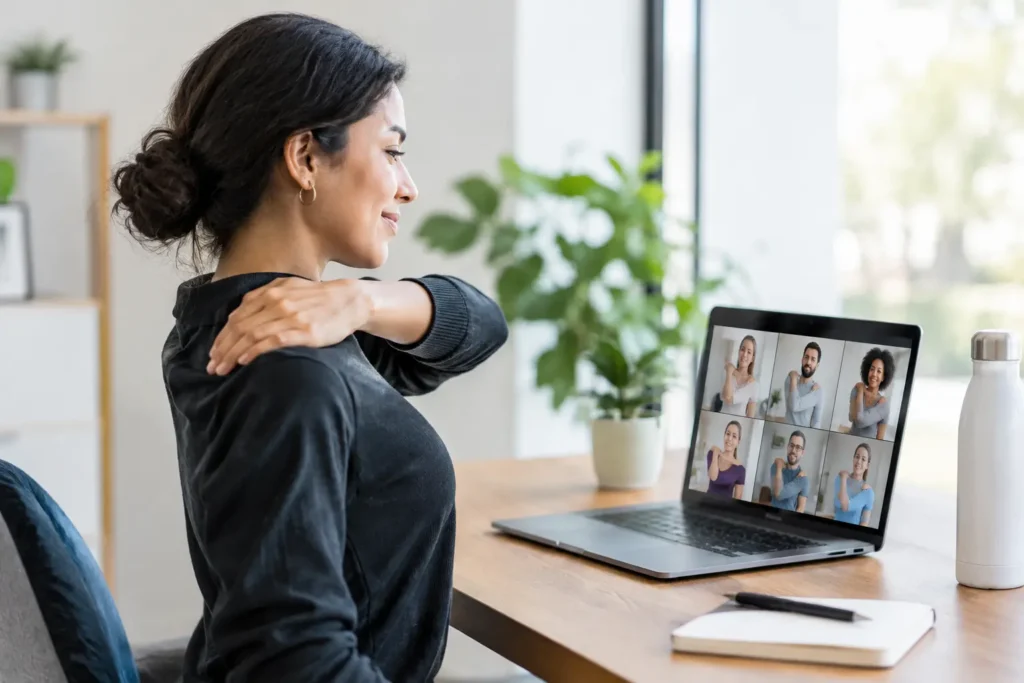
Short virtual movement sessions can be particularly effective for desk-based and hybrid teams. They require little equipment, can be delivered in ordinary workwear and give employees a visible break from prolonged sitting.
A 15-minute mobility session may achieve stronger uptake than a full exercise class, especially where people have limited space at home or are concerned about being on camera. Offer camera-off participation as standard and make clear that movements can be adapted. Inclusion matters – employees may have injuries, disabilities, pregnancy-related needs or different fitness levels.
Timing is a practical decision. Before-work sessions can appeal to some teams, while mid-morning or mid-afternoon sessions can help interrupt long periods of screen time. Test more than one slot before deciding what works. Attendance patterns will often differ between office-based, remote and operational staff.
Mental wellbeing and resilience training
Mental health sessions should be clear about their purpose. Awareness training can help employees understand stress, recognise signs that they or a colleague may need support, and know where to seek help. Manager training can go further by covering supportive conversations, reasonable boundaries and escalation routes.
Avoid positioning resilience as an instruction for employees to cope with unreasonable workloads. A useful session gives individuals practical tools, but it should sit alongside organisational action on workload, management practice and psychological safety. Employees will notice quickly if wellbeing activity is used as a substitute for addressing persistent workplace pressures.
Digital learning that remains available
On-demand courses help employers reach people who cannot join live events. They are also useful for reinforcing a campaign after a webinar or for supporting new starters. However, completion rates can fall when courses are simply uploaded and left unpromoted.
Give each course a place in a simple campaign. Introduce it through internal communications, explain who it is for, allow protected time where possible and send a short reminder before the access period closes. A course on posture, for instance, can be paired with a practical workstation checklist and a live Q&A.
Plan delivery around participation, not just content
The operational detail determines whether a good idea reaches employees. Before booking virtual wellbeing activities, decide who needs access, whether they can attend during work time and how sessions will be promoted.
A simple implementation plan should cover four areas:
- Audience and access: Include office, home-based, multi-site and shift-working employees. Check whether colleagues can join from personal devices and whether captions or other adjustments are required.
- Format and timing: Match the length and delivery style to the subject. Use short interactive sessions for movement and focused webinars for education.
- Communications: Promote the practical benefit, date, duration and joining process. Managers should be briefed so they can encourage attendance without making participation feel compulsory.
- Follow-up: Share useful resources, recordings where appropriate and signposting to internal support. Ask one or two short questions while the session is still fresh.
Privacy deserves particular attention. Employees may be reluctant to speak openly about their health in a group setting. Let people submit questions anonymously where possible, avoid asking anyone to disclose personal information, and make it clear how attendance data will be used. Participation figures can help assess reach, but they do not reveal whether an individual is well or unwell.
Connect online activity with measurable wellbeing support
Virtual provision is valuable for education and engagement, but it can be stronger when paired with practical ways for employees to understand their own health. For example, an online nutrition or heart-health session can sit alongside convenient workplace screening that gives employees immediate, individual results.
Relaxa’s Health Screening Kiosk provides core measures including height, weight, BMI, blood pressure, pulse and body fat percentage in a matter of minutes, with printed results for the employee. This gives a health campaign a tangible action point without the appointment scheduling that can limit uptake. For employers, anonymised usage information can also indicate participation across a campaign without compromising personal privacy.
The right combination depends on your workforce. A fully remote organisation may prioritise online webinars and courses. A large office or multi-site employer may gain more from combining digital education with on-site screening, massage or movement sessions. In either case, make the connection clear: education explains why a healthy habit matters, while practical activity helps employees take a first step.
Measure what is useful
Attendance alone is not a complete measure of success. A session can have modest attendance but reach the employees most likely to benefit. Equally, a heavily booked event may have a high no-show rate because the time was unsuitable.
Review registrations, attendance, recording views and course completion, then gather brief feedback on relevance and confidence to act. Ask whether employees learned something useful, whether the session was convenient, and what topic they would value next. This produces clearer decisions than asking whether they “enjoyed” the activity.
Look for trends over time rather than expecting one event to change absence, engagement or health outcomes immediately. Consistent campaigns, repeated access and visible support from managers are more likely to build trust and participation than a single wellbeing week.
The most useful virtual programme is one employees can realistically use in the middle of a working life. Make it easy to join, specific in purpose and connected to practical support, then use the feedback to make the next activity more relevant than the last.