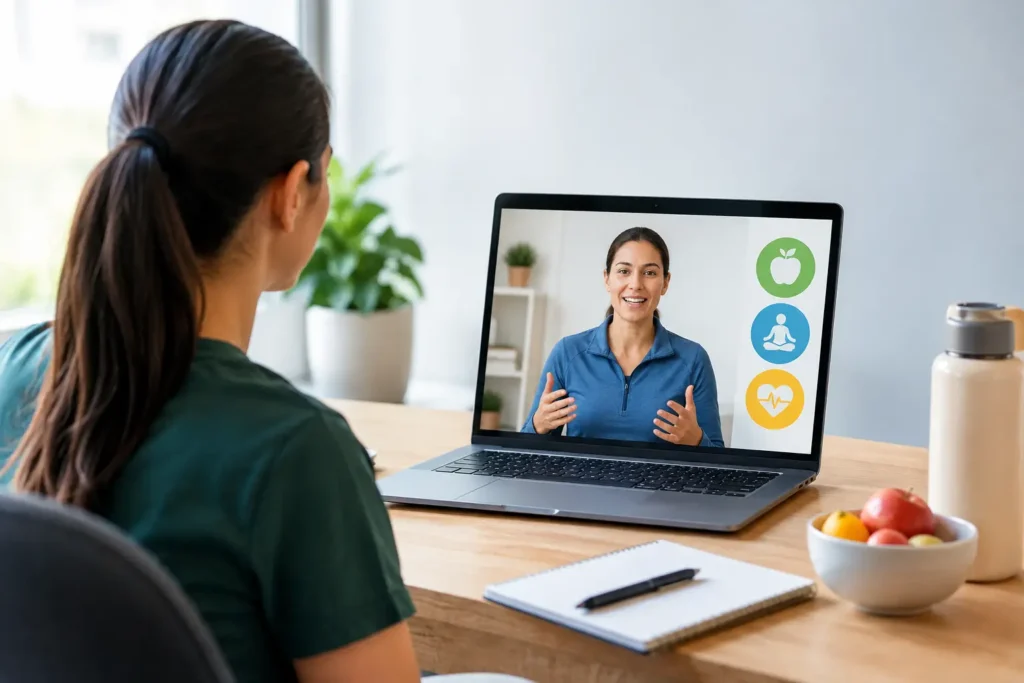
A well-timed employee health awareness webinar can reach people who would not book an appointment, attend an on-site class or seek support until a problem is already affecting their work. But attendance alone is not the measure of success. Employers need a session that gives people clear, useful information, makes the next step feel manageable and supports a wider wellbeing plan.
For HR and wellbeing teams, the attraction is straightforward: webinars can be delivered across offices, home-working teams and multiple UK locations without travel or complex scheduling. The challenge is making them relevant enough that employees choose to join and practical enough that the advice does not disappear when the meeting ends.
Start with a workplace health need, not a broad theme
A webinar called “health and wellbeing” is difficult to promote because it asks employees to guess whether it is for them. A focused subject is easier to understand and usually leads to stronger participation.
Start with the patterns your organisation can reasonably see. This could be an increase in stress-related absence, feedback about poor sleep, long periods of screen-based work, lower energy during busy periods, or concern about blood pressure and other basic health measures. Anonymous engagement data, staff surveys and conversations with wellbeing champions can all help identify the right priority. Avoid presenting individual health information or drawing conclusions from small groups.
The most effective topics solve an immediate workplace problem while recognising that health is personal. Stress and resilience, mental health awareness, sleep, posture, nutrition and movement all work well because employees can apply the learning in different circumstances. A session on blood pressure awareness may also be valuable where an employer is encouraging people to know their numbers, particularly when it is paired with convenient screening access.
It depends on the workforce. A desk-based team may respond to posture and movement guidance, while shift workers may place greater value on sleep, energy and eating patterns. For a mixed or multi-site organisation, offer a topic with broad relevance, then signpost more targeted support afterwards.
Choose a format employees can use
An employee health awareness webinar should feel like a useful 30 to 45 minutes, not a lecture added to an already full diary. A clear format protects that time and helps the presenter focus on action.
Begin by setting out what employees will take away. Explain the everyday signs or risks associated with the topic, separate fact from common myths, and provide a small number of realistic changes people can try. Leave time for questions, including anonymous questions where the platform allows it. People are more likely to ask about stress, mental health, sleep or body weight when they are not required to speak in front of colleagues.
Live delivery has advantages. Participants can ask questions and the presenter can respond to the organisation’s context. Recorded sessions are useful for colleagues on annual leave, shifts or different working patterns. Many employers get the best result from doing both: a live event with a recording available for a defined period, supported by a short follow-up message.
Keep the session educational rather than diagnostic. A webinar can explain why a raised blood pressure reading deserves follow-up, but it cannot assess an individual’s health. Make clear when employees should speak with a GP, pharmacist, occupational health professional or an appropriate support service. This is both responsible and reassuring.
Make attendance easy to say yes to
Wellbeing activity competes with deadlines, meetings and operational demands. If attendance requires too much effort, even an excellent subject will struggle. Offer at least two suitable time slots where possible, especially for organisations with site-based, field-based or shift-based teams. Mid-morning and early afternoon can work for office teams, but there is no universal best time.
Promote the practical value rather than relying on generic wellbeing language. Tell employees what they will learn, how long the session will take and whether questions can be asked anonymously. A simple message such as “practical ways to improve sleep when work is busy” is more compelling than “join our wellbeing webinar”.
Manager support matters. Managers do not need to become health advisers, but they should know that employees have permission to attend. When leaders protect the time and attend appropriately themselves, the initiative is seen as part of working life rather than an optional extra for people with spare capacity.
Do not assume that a calendar invitation reaches everyone. Use the channels employees already notice, such as internal posts, team briefings, digital screens or payslip communications. For a national workforce, make sure the joining instructions work on both personal and work devices if that is permitted by your organisation’s policies.
Connect awareness with a practical next step
Health awareness has greater value when employees can act while the subject is still fresh. The follow-up does not need to be complicated. It could be a downloadable habit tracker, a recording, a route to employee assistance support, a movement session or details of local services.
For organisations running a “know your numbers” campaign, on-site health screening provides a useful bridge between learning and action. A Health Screening Kiosk can capture height, weight, BMI, blood pressure, pulse and body fat percentage in minutes, with immediate printed results. Employees can use the kiosk without appointment slots, which removes a common barrier to participation.
The distinction is important: basic screening helps employees understand their current measurements and decide whether to seek further advice. It is not a substitute for a clinical diagnosis. Clear wording before and after the webinar prevents misunderstanding and encourages sensible follow-up where a result is outside the expected range.
This combined approach also helps wellbeing teams turn one event into a campaign. A webinar on heart health, stress or healthy routines can be followed by a screening period, a nutrition session and practical communications over several weeks. Employees have more than one opportunity to engage, rather than being expected to act after a single presentation.
Plan the delivery details before promotion begins
Online webinars are lower-friction than in-person events, but they still need ownership. Confirm the presenter, platform, joining process, recording permissions and a contact for technical problems. Test screen sharing, captions and audio in advance. Captions are particularly helpful for accessibility, busy home environments and colleagues who prefer to read along.
For any linked on-site activity, spell out the operational requirements early. A kiosk deployment needs suitable space and power, as well as a location that feels sufficiently private for employees to complete a check comfortably. A central communal area can generate visibility, but an overly exposed position may discourage use. The right choice depends on the workplace layout and culture.
A turnkey provider reduces the burden on HR teams. Delivery, installation, basic training, maintenance and consumables should be defined before the campaign starts, particularly where the programme spans several sites. UK-wide engineering support is valuable because it gives employers a clear route to resolve issues without turning the wellbeing lead into an equipment manager.
Measure what changed, not just who logged in
Registration and attendance figures are useful, but they only show reach. A short anonymous post-webinar survey can reveal whether employees found the session relevant, understood the suggested actions and intend to make a change. Ask no more than a few focused questions, or response rates will fall.
For a screening campaign, anonymised usage data can show uptake by site or period without exposing personal health information. This gives employers evidence of participation while respecting employee privacy. It can also guide future activity. If one location has strong kiosk use but low webinar attendance, for example, communications or shift patterns may need adjusting.
Look for practical indicators over time: repeat participation, demand for related sessions, manager feedback and changes in confidence around discussing wellbeing. Do not overclaim clinical outcomes from a short campaign. The credible value is improved access to information, stronger engagement and more opportunities for preventative action.
Relaxa can support this kind of year-round approach by combining online wellbeing learning with practical on-site services, allowing employers to match each campaign to their people, premises and priorities.
The best next step is a modest one: choose one health priority, schedule a session people can genuinely attend, and give them a clear action to take afterwards. Consistency will do more for workplace wellbeing than a single high-profile event.