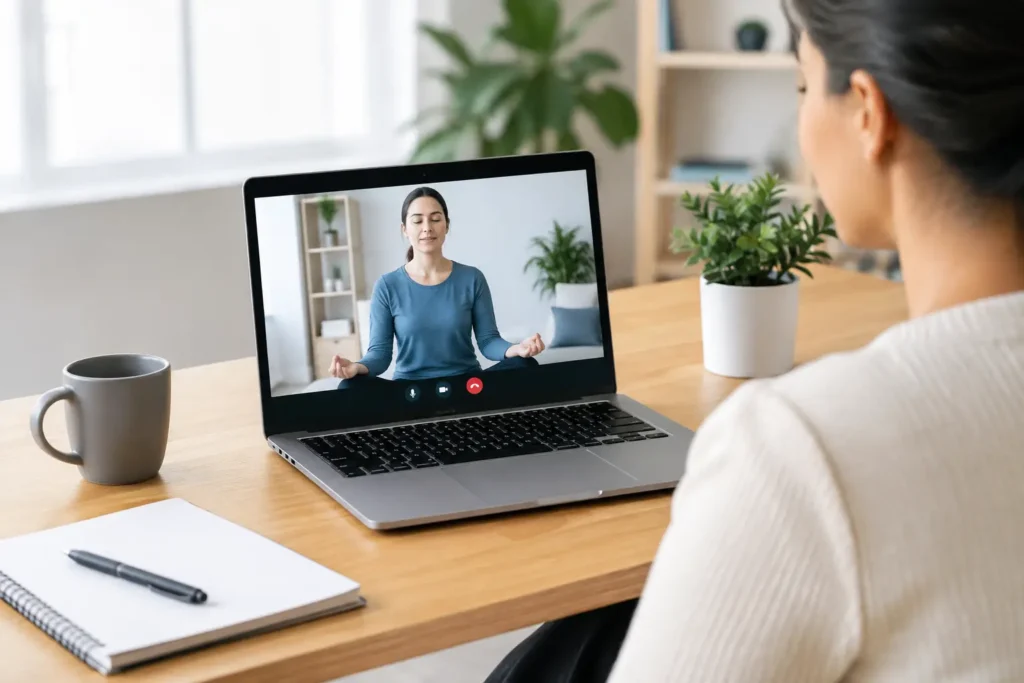
A tired workforce does not always look tired. It can look like slower decisions, short tempers, more errors, missed deadlines and employees relying on another coffee to get through the afternoon. Employee sleep and relaxation webinars give employers a practical way to address these pressures without asking people to share personal health details or attend appointments outside work.
For HR and People teams, the value is straightforward: a well-designed session can help employees understand the everyday habits affecting rest, recognise when stress is interfering with recovery and leave with actions they can test that same evening. Delivered online, webinars can reach office-based, hybrid and multi-site teams with minimal administration.
Why sleep belongs in a workplace wellbeing plan
Sleep is not solely a personal lifestyle issue. Work patterns, workload, commuting, shift arrangements, caring responsibilities and the expectation to remain contactable can all affect how well people switch off. Employers cannot control every factor, nor should they attempt to manage an employee’s private routine. They can, however, provide clear education, useful coping techniques and a working culture that does not reward permanent availability.
Poor sleep can affect concentration, mood, motivation and physical health. Over time, it may contribute to sickness absence, reduced performance and lower engagement. A webinar is not a clinical intervention, but it is an accessible first step that can normalise conversations about rest and signpost employees towards appropriate support where needed.
It also works well alongside broader wellbeing activity. A health screening day may prompt employees to take a closer look at blood pressure, weight or lifestyle habits. Sleep and relaxation education then gives them practical context: recovery, movement, stress and nutrition all influence how people feel and function at work.
What effective employee sleep and relaxation webinars cover
The best sessions avoid vague advice such as “get more sleep”. Employees need to understand what is within their control, what may take time to change and when persistent problems warrant professional advice.
Sleep habits that work in real life
A useful webinar explains the basics of sleep pressure and body clocks in plain English. It may cover keeping a reasonably consistent wake-up time, using daylight and movement to support alertness, reducing late-day caffeine, and creating a calmer transition from work to bed. The aim is not a perfect routine. For parents, shift workers and employees with demanding schedules, a realistic improvement is more useful than an idealised plan they cannot maintain.
The session should address screens with balance. Telling everyone to remove technology from their evenings is rarely practical. A better approach is to help people identify whether late-night work messages, scrolling or stimulating content are delaying sleep, then choose one manageable boundary.
Relaxation skills for the working day
Relaxation is not simply a reward at the end of a difficult week. Short techniques can help employees reset between meetings, after a challenging call or before travelling home. Breathing exercises, progressive muscle relaxation, guided imagery and brief mindful pauses can all be taught in a format that feels appropriate for work.
The facilitator should make participation optional and avoid asking attendees to disclose why they are stressed or tired. A camera-off online session with a short guided practice often encourages better uptake than a format that puts individuals on the spot.
Stress, boundaries and recovery
Sleep problems are frequently linked to an inability to mentally leave work behind. A webinar can explore practical boundaries, such as setting a clear end-of-day routine, writing down next-day priorities, turning off notifications and avoiding unnecessary out-of-hours messages. Managers may benefit from attending too, because team norms are often set by leadership behaviour.
The right message is not that employees must solve excessive workload with breathing exercises. Where workload, staffing or role design are the underlying issue, those require organisational action. Relaxation techniques are supportive tools, not a substitute for good management.
When to seek further support
A responsible wellbeing webinar makes its limits clear. Ongoing insomnia, severe daytime sleepiness, loud snoring with breathing pauses, anxiety, low mood or symptoms affecting safety should be discussed with an appropriate health professional. This protects employees from treating a general education session as medical advice and gives employers a sensible route for signposting.
Choosing a format that employees will attend
Convenience drives participation. A 45 to 60-minute live webinar is usually long enough to provide useful information, include a guided exercise and allow anonymous questions, while remaining manageable in a working day. Recording the educational element can help shift workers and colleagues on leave, although live attendance has advantages when employees want to ask questions.
Timing depends on the workforce. A lunchtime session can work well for office teams, while an early afternoon slot may be easier for employees working across locations. For operational or shift-based teams, consider repeating the session at different times rather than expecting one webinar to suit everyone.
Keep joining instructions simple. Use a familiar video platform, provide the date and access details well in advance, and explain that no equipment is required. A quiet space and a chair are enough for most relaxation practices. If employees are joining from home, reassure them that they can listen without appearing on camera.
How to run the webinar with minimal HR administration
A successful programme needs a small amount of planning, not a complex campaign. Start by deciding what you want the session to achieve. It could be improved awareness of sleep hygiene, a practical stress-management intervention during a busy period, or a wider wellbeing calendar that supports preventative health throughout the year.
Brief the facilitator on your workforce. They do not need confidential employee information, but they should know whether attendees are mainly desk-based, hybrid, customer-facing or working shifts. This helps them use relevant examples and avoid advice that is unrealistic for the group.
Promote the webinar in a clear, non-judgemental way. Position it as practical support for anyone who wants to feel more rested or find calmer ways to manage pressure. Avoid language that suggests employees are failing if they struggle with sleep. Attendance will be stronger when managers actively make time for the session rather than treating it as an optional extra to fit around full diaries.
Afterwards, send a concise takeaway sheet with the key techniques covered and any agreed internal support routes, such as an employee assistance programme or occupational health process. This gives employees something they can return to without overwhelming them with information.
Measuring whether the session is useful
Webinar attendance is a helpful starting point, but it is not the whole measure. A high registration number with low live attendance may indicate that the time chosen was unsuitable or that managers did not protect the time. Conversely, a smaller session with strong feedback may be more valuable for a targeted team.
Use a short anonymous follow-up survey. Ask whether the content was relevant, whether employees learned at least one action they are likely to try, and whether they would attend a related wellbeing session. Where appropriate, compare results across sessions and use the findings to plan the next topic.
Useful outputs can include registration numbers, attendance, recording views, feedback scores and themes from anonymous questions. Do not seek personal sleep data or ask employees to justify health concerns. The purpose is to measure engagement with the wellbeing offer, not to monitor individuals.
For a more rounded programme, employers can pair webinars with practical activity across the year: office yoga or movement sessions to encourage physical decompression, mental health awareness training for managers, and convenient health checks that help employees understand core measures. Relaxa can deliver sleep and relaxation sessions as part of a wider workplace wellbeing schedule, helping organisations offer consistent support without adding unnecessary coordination work.
The trade-off: one-off event or ongoing support
A single webinar can be timely and worthwhile, particularly during a period of change, high workload or winter fatigue. It gives employees a shared language and immediate techniques. However, habits are more likely to stick when the message is reinforced.
That does not mean running a webinar every month. A sensible approach may be one live sleep session, a follow-up resource, and a related session later in the year on stress, resilience or movement. The right frequency depends on workforce size, budget, existing support and whether employees work predictable hours.
The strongest outcome is often modest but meaningful: an employee tries a wind-down routine, a manager stops sending late-evening messages, or a team takes ten minutes to reset after an intense project. Give people practical permission to recover, and wellbeing support becomes part of how work is organised rather than another item on a busy to-do list.