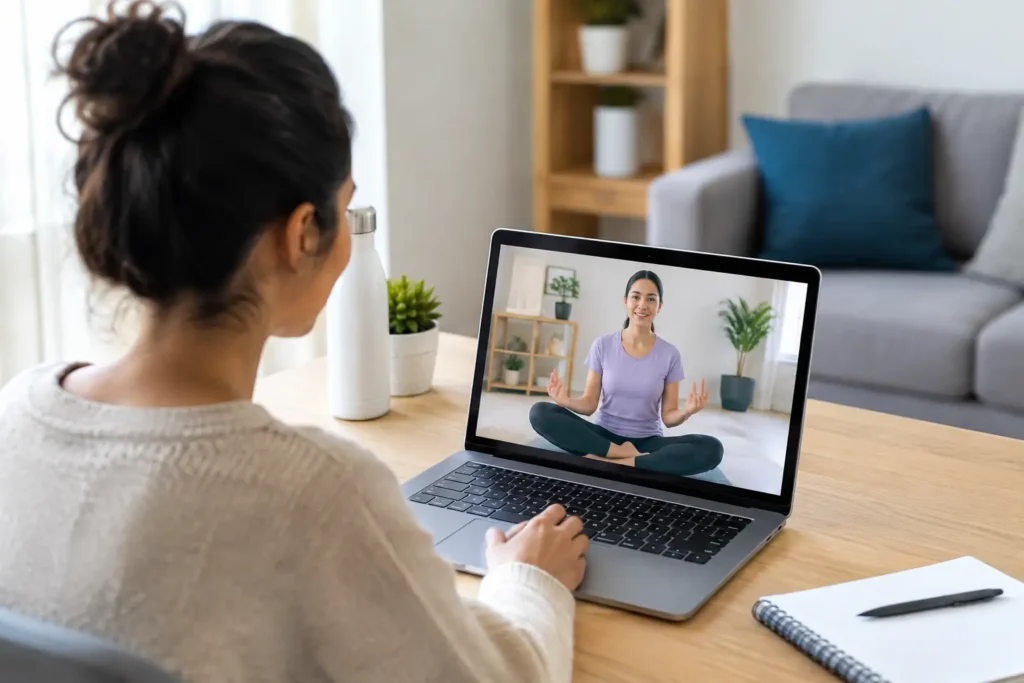
A lunchtime session with a respected speaker is not automatically a wellbeing initiative. For employees managing deadlines, caring commitments and competing meetings, wellness webinars need to be relevant, easy to join and useful within the same working day. When planned properly, they give employers a practical way to reach office-based, hybrid and multi-site teams without the scheduling burden of individual appointments.
For HR and People teams, the value is clear: a single online session can support a large audience, reinforce a wider wellbeing message and provide an accessible starting point for employees who may not seek one-to-one support. The challenge is turning availability into participation – and participation into a change that lasts beyond the webinar window.
Why wellness webinars work in the workplace
Wellness webinars work best as a preventative tool. They help employees understand common health topics before an issue becomes more difficult to manage, from recognising signs of stress to improving sleep habits or reducing discomfort caused by prolonged desk work. A well-run session also makes workplace wellbeing feel more visible and more normal, particularly where teams are dispersed.
Their format is especially useful for organisations with limited time and space. There is no need to book a meeting room in every location, arrange travel for a facilitator or release people for long periods. Employees can join from a desk, a home workspace or a shared site, while a recording can extend access to colleagues who work shifts or cannot attend live.
That convenience has a trade-off. An online session cannot replace clinical advice, occupational health assessment or direct mental health support where these are required. Nor should an employer treat attendance as proof of improved wellbeing. Webinars are most valuable when they sit within a clear programme that gives employees practical next steps and routes to appropriate support.
Choose topics employees can act on
Broad subjects such as “wellbeing” can feel vague and are easy to postpone. Specific, familiar challenges are more likely to earn attention because employees can see why the session applies to them. Stress management, resilience, mental health awareness, sleep, posture and nutrition are all strong choices when presented with realistic workplace context.
For example, a session on sleep should go beyond general advice to explain how screen habits, caffeine timing, shift patterns and workload boundaries can affect rest. A posture webinar should recognise that poor comfort is not solved by sitting perfectly all day. It should cover movement, workstation set-up and when persistent pain needs professional attention.
Topic selection should reflect employee feedback, absence patterns, seasonal pressures and the type of work people do. A call-centre team, a manufacturing site and a professional services firm may all benefit from stress education, but the examples, delivery times and follow-up support may need to differ. An annual wellbeing calendar gives structure, while leaving room to respond to a period of organisational change or an emerging need.
Make the session concise and credible
For most workplace audiences, 30 to 45 minutes is a practical length. It allows enough time to explain the subject, correct common misconceptions and share useful actions without taking too much from the working day. A longer workshop may be appropriate for managers or a smaller group with a defined learning need, but length alone does not create depth.
Credibility matters. Presenters should be qualified in the subject area and comfortable translating health information into plain language. Employees do not need a lecture full of clinical terminology. They need clear guidance on what they can try, what warning signs to take seriously and where to find further help.
A simple structure usually works well: establish why the issue matters at work, explain a few evidence-informed principles, then offer practical actions. Leave time for anonymous questions where possible. The option to ask without speaking publicly can improve engagement, especially during mental health sessions.
Plan delivery around participation, not convenience alone
The easiest time for the organiser is not always the best time for employees. A webinar held at midday may suit office teams but exclude customer-facing colleagues, carers or workers on fixed breaks. Consider running a live session more than once, offering a recording and making clear whether watching later still counts towards internal learning or wellbeing activity.
Promotion should begin early enough for employees to protect the time in their calendars. The invitation needs more than a generic subject line. State the topic, the duration, who it is for and what people will take away. “Practical ways to switch off after work” is more compelling than “Wellbeing webinar”. Managers can help by actively encouraging attendance and avoiding avoidable meeting clashes.
Accessibility should be planned from the start. Use captions where available, share slides or supporting materials in a readable format, and avoid relying solely on small on-screen text. If employees have variable internet access or limited digital confidence, provide a straightforward joining process and a contact for technical support.
A reliable provider should also reduce administration for the HR team. Agree the format, date, audience and promotional wording in advance, then confirm how attendance, recordings and any follow-up materials will be managed. Clear ownership prevents the common problem of a good session being arranged but poorly communicated.
Turn learning into a wider wellbeing programme
A webinar is a useful moment of attention. It becomes more effective when it connects with other workplace activity. A stress awareness session, for instance, can be followed by a manager briefing on supportive conversations, signposting to employee assistance support and a later resilience workshop. A nutrition webinar may lead into a healthy eating challenge or workplace campaign.
Physical health content can also sit alongside convenient opportunities for employees to know their numbers. On-site health screening provides immediate measures such as height, weight, BMI, blood pressure, pulse and body fat percentage. For some employees, understanding a health measure can make a later webinar on movement, sleep or nutrition feel more personally relevant. The two services serve different purposes: screening provides a snapshot, while education helps people interpret healthy habits and consider sustainable changes.
Relaxa can combine online learning with on-site wellbeing services, helping employers build activity across the year rather than relying on a single awareness day. The right mix depends on workforce size, locations, budget and whether the immediate priority is education, engagement or basic health checks.
Measure the outcomes that matter
Registration numbers alone can be misleading. Some employees register and do not attend; others watch a recording without appearing in the live attendance data. Use several measures to understand whether the programme is working: live attendance, recording views, completion of a short feedback form, confidence before and after the session, and demand for related support.
Keep feedback focused. Ask whether the session was relevant to the employee’s work, whether the information was clear and whether they intend to take a specific action. An optional question about future topics can improve the next programme rather than relying on assumptions.
Employers should handle wellbeing data carefully. Individual health information and webinar questions may be sensitive. Report participation trends in aggregate, explain what data is collected and avoid asking employees to disclose personal health details in a group setting. This builds trust and encourages more honest engagement.
The most meaningful outcomes may take time to appear. Better awareness, earlier help-seeking and healthier routines are not always visible in a monthly dashboard. However, repeated programmes can show patterns in participation and feedback, helping HR teams direct future investment where it is most useful.
Avoid the common reasons webinars lose impact
A webinar will struggle if it is too general, too long or disconnected from employees’ real working conditions. It will also underperform when organisations schedule it during peak operational periods, promote it at the last minute or provide no follow-up. These are not content problems alone; they are implementation problems.
Avoid overstating what a session can achieve. A webinar can start a useful conversation and give people practical knowledge, but it cannot fix excessive workload, unclear priorities or a poor management culture. Where employee feedback repeatedly points to those issues, leaders need to address the workplace conditions as well as offering individual wellbeing support.
The strongest wellbeing webinars respect employees’ time, offer credible guidance and make the next step obvious. Start with a topic people recognise in their own working lives, make attendance straightforward, and follow it with support that employees can use when they need it.