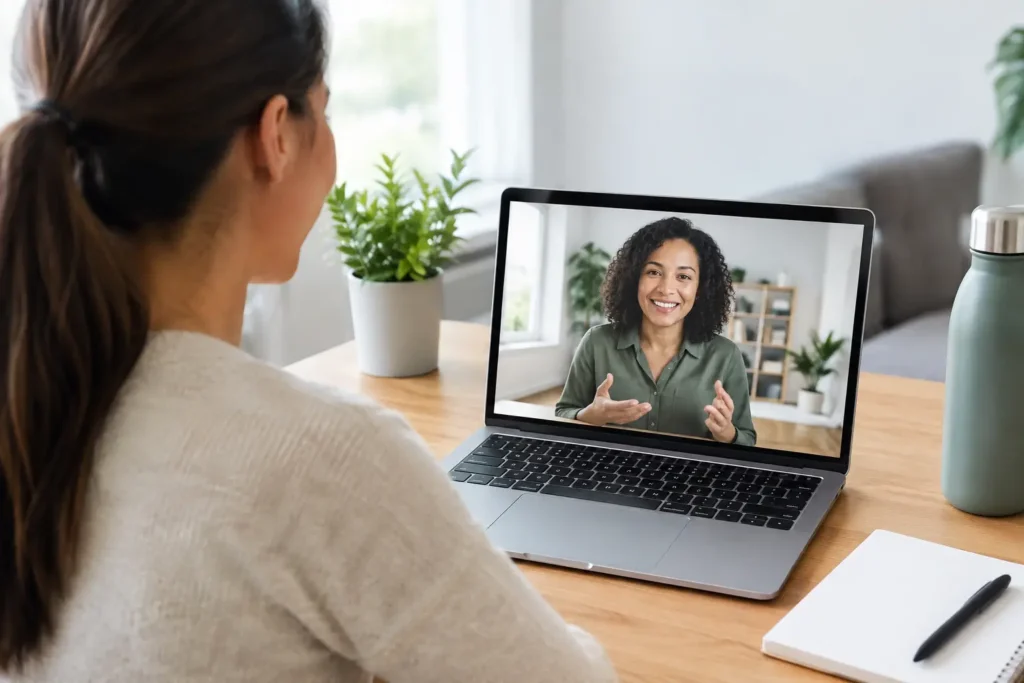
A webinar can be booked in minutes and still fail to make an impact. The difference is rarely the platform. Wellbeing webinars work when they solve a recognisable workplace problem, fit realistically into the working day and give employees something practical to use after the session ends.
For HR and People teams, webinars are a convenient way to offer consistent support across office-based, hybrid and multi-site teams. They remove travel, room-capacity and scheduling barriers, while allowing organisations to cover key subjects such as stress, sleep, nutrition, resilience and mental health awareness throughout the year. But convenience alone does not create engagement. The programme needs a clear purpose, a sensible format and an approach to measurement that respects employee privacy.
Why wellbeing webinars earn a place in your programme
A well-planned webinar reaches people who may not attend an on-site class, health event or appointment. This is particularly useful for dispersed teams, shift workers and employees who split their time between home and the workplace. Employees can join from a meeting room, desk or home office, without adding travel time to an already busy day.
They also make wellbeing provision easier to scale. Rather than arranging the same session at several locations, an employer can offer one live event to the whole organisation, then use a recording where appropriate. This helps create a more consistent employee experience and enables smaller sites to access the same level of support as larger offices.
There is a trade-off. A webinar is less personal than a one-to-one health conversation, and it cannot replace clinical care, occupational health advice or support for someone in crisis. Its role is preventative and educational: helping employees understand a subject, recognise useful habits and know where to seek further support when required.
Start with the workplace issue, not the webinar topic
Generic wellbeing content is easy to source but harder to attend. Before selecting a subject, look at what employees are dealing with. Absence patterns, employee survey feedback, seasonal pressures, engagement data and conversations with managers can all point to the areas where education would be most useful.
For example, a business preparing for a demanding project period may benefit from a practical session on managing pressure and recovery. A largely desk-based workforce may respond to posture, movement and screen-break guidance. If people are reporting poor energy or disrupted routines, sleep and nutrition may be more relevant than another broad session on wellbeing.
Keep the language specific and workplace-friendly. “Sleep strategies for busy working weeks” gives employees a clearer reason to attend than “improving wellbeing”. “How to spot and respond to stress” is more useful than a vague resilience title. The aim is not to oversell a single session. It is to make the benefit obvious.
Build a balanced annual schedule
A year-round programme is usually more effective than a one-off awareness event. Employees have different needs at different times, and repeated opportunities allow them to engage when a topic feels relevant.
A balanced calendar could include mental wellbeing, physical health and everyday lifestyle subjects. Stress management and mental health awareness may sit alongside sleep, nutrition, posture, movement and resilience. Seasonal timing can help too. Financial pressures, workload peaks, winter energy levels and the return from annual leave all shape what employees may need from a session.
Avoid trying to cover every subject at once. A focused 45-minute webinar on better sleep habits is easier to understand and act on than a session attempting to address stress, nutrition, exercise and mental health in one presentation.
Design webinars for real working days
The ideal duration depends on the workforce, but 30 to 45 minutes is often practical. It gives the presenter enough time to explain the subject properly, include examples and answer a small number of questions, without creating a major diary commitment. For teams with limited flexibility, a 20-minute briefing may achieve better attendance, provided the topic is tightly focused.
Make the session useful from the first few minutes. Employees should quickly understand what they will take away, whether that is a method for winding down after work, a way to reset posture at a desk or clearer knowledge of the signs of stress. Theory has a place, but it should support practical action rather than dominate the session.
A strong format usually combines a short explanation, realistic workplace examples and simple actions employees can try that day. In a sleep webinar, this might mean discussing routines, screen use and the impact of caffeine rather than offering medical claims. In a posture session, it may mean demonstrating workstation adjustments and movement breaks that do not require specialist equipment.
Create space for questions without pressure
Questions can make a webinar more relevant, but not everyone will want to speak openly about their wellbeing in front of colleagues. Anonymous question tools or the option to submit questions in advance can improve participation and protect privacy.
Set clear expectations at the start. Explain that the session is educational, that personal health concerns should be discussed with an appropriate healthcare professional, and that employees do not need to share private information. This is especially important for topics involving mental health, stress or physical symptoms.
Recording also needs judgement. A factual session on nutrition or desk posture may work well as an on-demand resource. A live discussion about stress or mental health may be more valuable without a recording, particularly if employee questions are involved. If a recording is planned, tell attendees in advance and consider pausing it for the Q&A.
Improve attendance before sending the invitation
The invitation matters more than many organisations expect. A diary entry labelled “wellbeing webinar” can feel optional and easy to ignore. Explain the topic, who it is for, how long it will take and what employees will gain. A simple, direct description is usually best.
Manager support makes a material difference. If managers treat attendance as a legitimate part of the working day, employees are less likely to feel they must choose between joining the session and completing their workload. This is particularly relevant in operational teams, customer-facing roles and workplaces with a strong culture of back-to-back meetings.
Offer more than one route to access where possible. A live session creates energy and allows questions. A recording, short follow-up guide or related online course gives those who could not attend a chance to benefit later. For a national workforce, consider whether repeated live sessions at different times would improve access for shift patterns and regional teams.
Connect webinars to practical wellbeing activity
Webinars are most effective when they are not isolated from the rest of the wellbeing offer. A session on preventative health can encourage employees to take a basic health check. A webinar on movement can be followed by office yoga or a guided stretch session. A mental wellbeing awareness session may sit alongside clear signposting to existing employee support.
This joined-up approach gives employees different ways to engage. Some will prefer learning privately online; others will respond better to an interactive on-site activity. For employers, it creates a more credible programme than relying on one annual event.
Relaxa can combine webinar and online learning options with workplace services such as movement sessions, massage and Health Screening Kiosks. The kiosk provides immediate results for core measures including height, weight, BMI, blood pressure, pulse and body fat percentage, while webinar content can help employees understand the everyday behaviours that support preventative health. The two services have different purposes, but together they can make wellbeing activity more visible and actionable.
Measure what is useful, not merely what is easy
Registration numbers are helpful, but they do not show whether a webinar was useful. Attendance, live engagement and recording views provide a starting point. A short anonymous feedback form can add more value by asking whether employees found the session relevant, whether they learned something new and whether they intend to make a practical change.
Keep feedback light. Three or four focused questions will usually generate more responses than a long survey. Over time, compare participation by subject, time of day, location and employee group where this can be done appropriately. This will show whether certain topics or formats are consistently more effective.
Do not expect every benefit to be immediately measurable. Wellbeing education can influence small decisions: taking a screen break, speaking to a manager earlier, checking blood pressure or improving a bedtime routine. Those actions may not appear in a dashboard, but they still matter. The most useful reporting combines participation figures with employee feedback and a record of how learning is being used to shape the next programme.
Make the next action easy
A webinar should finish with one clear next step, not a long list of intentions. That may be downloading a short resource, booking onto the next session, trying a movement break or using an available health screening opportunity. The easier the action is to complete, the more likely employees are to follow through.
When wellbeing support is practical, accessible and repeated at the right moments, it becomes part of how people work rather than another item in their inbox.