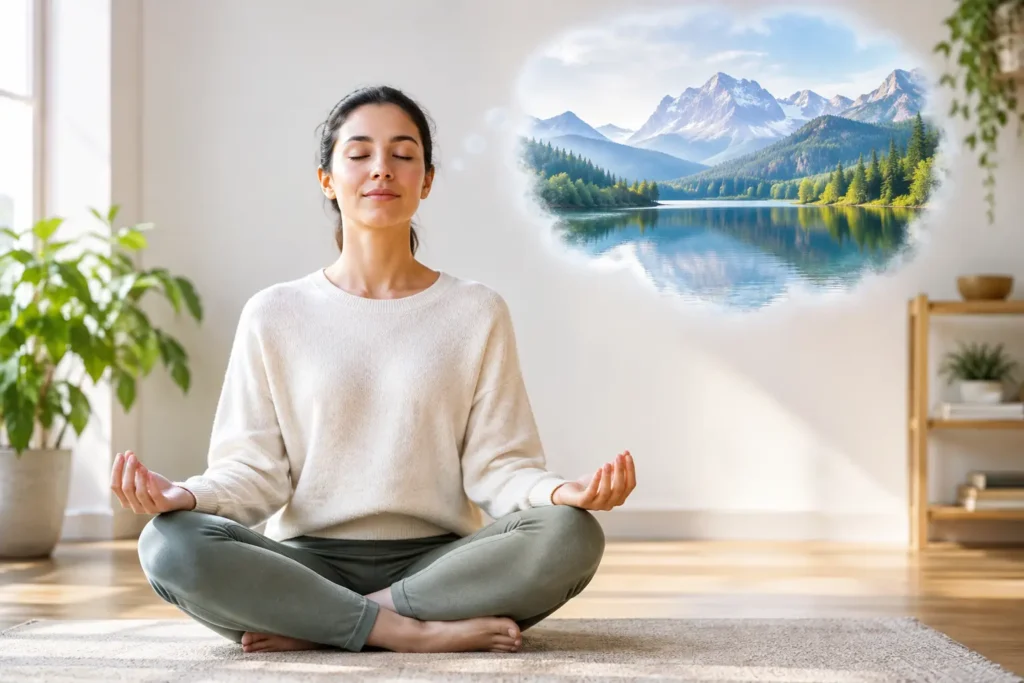
A busy working day rarely creates a natural pause. Meetings run into messages, screens compete for attention and employees can move from one urgent task to the next without noticing how tense or distracted they have become. Learning the basics of meditation and visualisation gives people a practical way to interrupt that cycle – in a few minutes, at their desk, in a quiet room or as part of a structured wellbeing session.
For employers, the value is not in promising a quick fix for stress. It is in providing accessible techniques that employees can use when pressure is building, before a presentation, after a difficult conversation or between demanding pieces of work. Meditation and visualisation are simple to introduce, but they work best when they are presented clearly, practised regularly and offered as one part of a wider wellbeing approach.
What meditation and visualisation are – and are not
Meditation is a deliberate practice of paying attention. A beginner may focus on the movement of their breath, the sensations of sitting in a chair or the sounds in the room. When their mind wanders, as it will, they gently bring attention back. The aim is not to stop thinking, empty the mind or perform perfectly. It is to notice what is happening and practise returning to the present task.
Visualisation uses the mind to rehearse an image, place or process. Someone might picture walking into a meeting feeling steady, imagine completing a difficult task step by step, or recall a familiar location that feels calm and safe. It can support preparation and focus because it gives the brain a clear, usable point of attention.
The two practices often sit well together. A short meditation can settle attention first; a brief visualisation can then help an employee prepare for what comes next. They are not the same as clinical treatment, however, and should never be positioned as a replacement for mental health support, occupational health advice or reasonable adjustments where these are needed.
Why short workplace practices can be useful
A ten-minute session may be more realistic than asking employees to commit to a long daily practice. In a workplace setting, convenience drives participation. A session held at a predictable time, available online as well as on site, and framed as optional can reach people who would not attend a more formal wellbeing activity.
These practices can help employees recognise early signs of pressure: shallow breathing, racing thoughts, a clenched jaw or difficulty concentrating. That recognition creates a choice. Rather than reacting automatically, they can take a short pause and decide how to respond.
The benefit will vary. Some employees find a breath-focused exercise immediately grounding, while others prefer a practical visualisation before a challenging piece of work. People who feel uncomfortable closing their eyes, or who find internal focus unsettling, should be able to keep their eyes open, look at a fixed point or opt out without explanation. Choice is a key part of making wellbeing activity inclusive.
Learning the basics of meditation and visualisation at work
The most effective starting point is simple, specific and time-limited. Employees do not need special clothing, equipment or a separate wellness room. A supportive chair, a relatively quiet space and five minutes without interruption are enough.
Start with a one-minute arrival
Invite employees to sit with both feet on the floor or in another comfortable position. They can soften their gaze or close their eyes if they wish. Ask them to notice three things: the contact between their feet and the ground, the support of the chair, and one natural breath moving in and out.
There is no need to change the breath. Trying to breathe deeply can feel uncomfortable for some people. Simply noticing the next few breaths gives attention a neutral place to rest. If thoughts arrive about work, home or the exercise itself, the instruction is straightforward: acknowledge the thought and return to the physical sensation of breathing or sitting.
This is the core meditation skill. The mind wandering is not a failure; recognising that it has wandered is the practice.
Build to a focused five-minute practice
Once the first minute feels familiar, extend the exercise. A facilitator can use plain, unhurried language: notice the breath; notice any tension in the shoulders; let the shoulders drop if that feels comfortable; return attention to the breath.
A quiet timer is useful in group sessions. At the end, give people a few seconds to open their eyes, look around the room and identify the next small action in their day. This transition matters. Employees should leave a session ready to re-engage with work, rather than feeling abruptly pulled back into it.
For hybrid teams, an audio-led session can be effective. The facilitator should not assume that every participant has privacy or a calm home environment. Keeping cameras optional and offering an alternative written prompt supports wider participation.
Add a practical visualisation
Visualisation is most useful when it relates to a real situation. Before a presentation, for example, employees can picture entering the room or joining the call, placing their notes in front of them and taking one steady breath. They can imagine speaking at a measured pace, pausing to check their key message and responding to questions one at a time.
The goal is not to imagine that nothing will go wrong. A credible visualisation includes recovery: losing a train of thought, checking notes, taking a breath and continuing. This is more useful than a perfect mental film because it rehearses a practical response to normal pressure.
For a broader reset, employees can visualise finishing the current task, writing down the next priority and closing unnecessary tabs. The image should lead to an action, not become another item on the to-do list.
How to introduce sessions without creating pressure
Workplace wellbeing initiatives gain trust when participation is genuinely voluntary. Avoid presenting meditation as a tool for making people work harder or cope with unmanageable workloads. If teams are consistently overstretched, workload, staffing, deadlines and management support also need attention.
Position a session as a chance to practise a focus or recovery skill. Explain its duration, what employees will be asked to do and that they may leave their eyes open, sit quietly or step out. Managers should be encouraged to protect the time rather than treating attendance as something employees must make up later.
A practical rollout may include a short introductory webinar, live on-site sessions and a recorded version for shift workers or multi-site teams. Running sessions at different times will usually improve access. In larger organisations, anonymised attendance data and post-session feedback can show whether the format, timing and topic are working without asking employees to disclose personal information.
Choosing the right format for your workforce
A guided group session provides structure and can make a new habit feel less intimidating. It is a good fit for wellbeing weeks, team away days or regular lunchtime activity. However, some employees may not want to practise alongside colleagues, particularly if they are new to meditation.
Short digital learning gives people privacy and flexibility. It works well for dispersed workforces and for employees who prefer to practise at a time that suits them. The trade-off is that uptake can be lower without a clear internal launch and manager encouragement.
A combined approach is often the most practical. Offer a live introduction to remove uncertainty, then provide short recordings or written exercises that employees can return to. The content should be brief enough to use between meetings, rather than requiring a long uninterrupted block of time.
Measuring what matters
Meditation and visualisation are personal practices, so employers should be careful about claiming medical or productivity outcomes from a single session. More useful measures are participation, repeat attendance, self-reported confidence in using the technique and feedback on whether the sessions feel relevant and accessible.
A simple pulse question can help: “Did this session give you a technique you could use during your working day?” Responses can inform future topics such as sleep, resilience, posture or managing stress. Used alongside broader wellbeing activity, these insights help employers build a programme that responds to employee needs rather than relying on one-off events.
A five-minute pause will not remove every source of pressure. It can, however, give an employee a repeatable way to notice their state, regain a little control and take the next step with greater intention. That is a useful skill to make available wherever work is done.